

Feature Editorial — Vibe Coding
Can Vibe Coding Replace a Developer? I Tested It on Atoto Atori — Here’s My Honest Take
They called it scattered.
Seven brands under one roof, they said. Pick one. Focus. You are confusing your audience.
What they could not see — what no developer brief, no mood board, no stakeholder meeting had ever successfully communicated — was that the seven were not competing. They were breathing together.
That is not scattered. That is an ecosystem. For years, I could not make anyone build it that way.
It Began With a Portrait
Before there was a stack, before there was a system, there was an image.
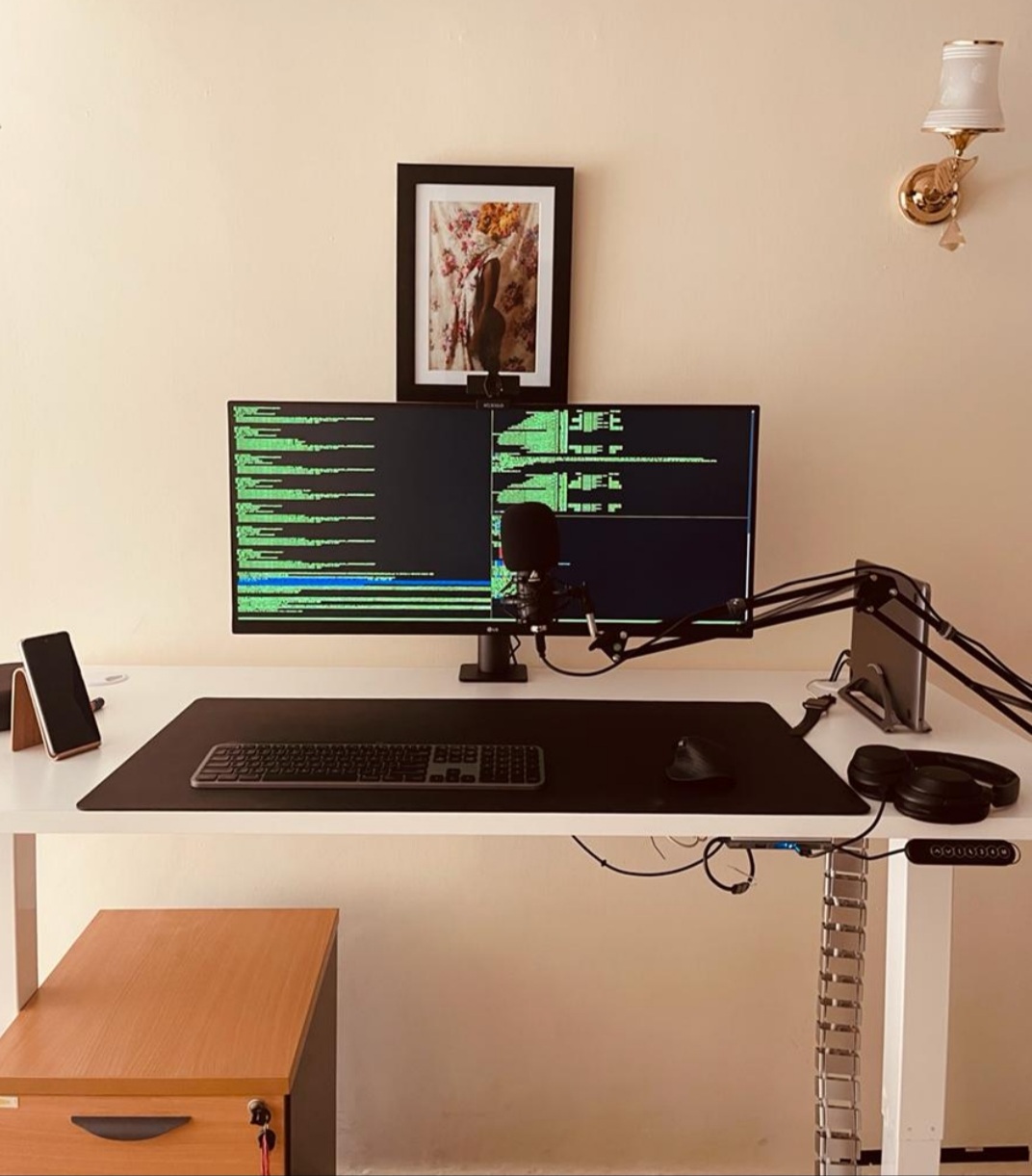
The Portrait of a Brown Lady on Fire — an artistic spark captured in Yviarture’s project “Is this art or creative sultry?” inspired by Victoria Musebe — is where this entire journey begins.
It started as a creative inquiry into identity and the stories we choose to inhabit. But when we look at the work that came after — the systems, the archives, the deliberate decision to build a professional life capable of sustaining both a sprawling family and a consultancy — we see something else entirely. We feel my voice in its true, systemic form.
Many have asked whether the Brown Lady in the portrait is art or something else. To me, she is the embodiment of professional confidence. The fire that burns when you stop asking for permission and start building the infrastructure that honours your capacity.
That portrait is the origin of Yvi.
Everything else is the infrastructure that grew from it.
The Problem Was Never Technical
Every developer I worked with was skilled. The problem was translation.
My ideas live in a register that does not fit neatly into a Figma brief or a bullet-point scope document. When I said sensory wellness, they heard spa website. When I said literary world, they heard blog. When I described how Yvishop and Yvitales codepend — how the commerce feeds the narrative and the narrative gives the commerce meaning — they nodded and then built two separate things that happened to share a header font.
They were not wrong. They were working with the information I could hand them. And I had never found a way to hand them the whole thing.
The Vibe Coding Stack: Three Tools, One Voice
Vibe coding is the practice of building digital products through conversation with AI — describing what you want in natural language and letting the model generate the code, the structure, the logic. No formal technical training required. Just clarity of vision and the willingness to iterate.
But vibe coding is not one tool. It is a stack.
Each tool with its own role. None of them the author.
Voice is not a setting you toggle on in an AI interface — it is a system you maintain. It is the refusal to automate mediocrity and the discipline to edit the machine’s output until it carries the weight of lived experience.
As Mr. Samuel Ralak, the builder behind Hadithi, frames it: the goal is not to let AI write as you. It is to leverage the tool to get 60–70% of the way there, fast enough and consistently enough that you can close the final 30% yourself. Because the alternative is not perfection — it is silence.
Hadithi AI, in this workflow, was never the author. It was the anvil. It seeks to remove the friction of the blank page so that the original thought — the one AI can never generate — could show up, hit publish, and survive.
What Actually Happened When I Was Building Nnalolile Yvi
I opened Claude and I did not simplify.
That was the difference. Every other tool, every other process, had rewarded simplification. Make it smaller. Make it cleaner. Make it one thing. Claude did not ask me to do that. Claude asked me to keep going.
So I described Atoto Atori the way it actually exists — the arms, the audiences, the way each one holds a different version of the same woman, the way they are meant to feel distinct and yet unmistakably connected. And Claude held all of it. It did not flinch at the complexity. It did not suggest I cut anything. It built toward the vision instead of away from it.
Page by page. Arm by arm. The design system we established — Cormorant Garamond for the literary weight, DM Sans for the everyday clarity, a palette that could dress a Trust Fund page and a sensory wellness centre without contradiction — began to feel like a language. One language. Seven dialects.
For the first time, Atoto Atori looked the way it felt inside my head.
My Honest Verdict: Does Vibe Coding Work for African Creators?
A vibe coder is not a developer.
A vibe coder is a developer’s most informed human.
What vibe coding gave me was not a finished product — it gave me a realised draft. A proof of concept that a developer can now walk into, touch, and understand. The connective tissue is visible. The intention is built into the structure. When a developer comes to Nnalolile Yvi today, they do not receive a brief. They receive a working world.
That changes everything about the collaboration.
The years of explaining are behind me. Not because I no longer need developers — I do, and I will — but because I finally have evidence. The vision is no longer abstract. It exists somewhere outside my head, somewhere a technical mind can enter and move around in and say: oh. I see what she means.
The Fire Is Not Fading
The Brown Lady on fire is still burning. She is just finally being fuelled by the right systems.
This is not the end of the build — it is the beginning of the publishing. The stack is complete. The workflow is sustainable. And the seven arms of Nnalolile Yvi are standing, codependent and deliberate, exactly as they were always meant to be.
For African creators whose ideas have ever been called too ambitious, too layered, too hard to explain — this is for you. Start building. Not because the build will be perfect. But because an imperfect, visible, touchable version of your vision is worth ten years of trying to describe it.
Leave a Reply