
M-Pesa Is 18. The Generation It Raised Is Running Chamas — And Losing Money to a Notebook.
The tool that digitised individual money in Kenya never digitised the group. The generation that grew up tapping till numbers is now 25–35, running savings groups — and still doing it on paper. Something has to change.
In March 2007, Safaricom launched a mobile money service that nobody in the world had seen before at scale. You could deposit money into your phone, send it to another number, and have it withdrawn at an agent around the corner. No bank account required. No branch. No queue.
M-Pesa did not just change how Kenyans moved money. It changed what money was. It made cash digital before most of the world had figured out how to do that without a smartphone. It put financial inclusion on the map — not as a policy aspiration but as a product people actually used, daily, at a scale that shocked economists and embarrassed legacy banks simultaneously.
Eighteen years later, M-Pesa is infrastructure. It is the invisible layer under Kenyan commerce. Market stalls, landlords, schools, supermarkets, government services — they all run on it. The question worth asking in 2025 is not whether M-Pesa transformed Kenya. It did. The question is: what did it leave unfinished?
The answer, if you look at how Kenyans actually save money together, is the group.
The Generation M-Pesa Raised
The Kenyan in their late twenties or mid-thirties today grew up with M-Pesa. They did not adopt it — they inherited it. Their first financial memory is not a bank passbook. It is a till number. An M-Pesa confirmation SMS. The sound of a Safaricom agent’s receipt printer.
This generation is now the engine of Kenya’s informal economy. They are starting small businesses in Nairobi’s estates and upcountry towns. They are joining — and leading — savings groups. They are managing welfare funds for their churches and alumni associations. They are running chamas.
The chama is not a fringe phenomenon. It is one of Kenya’s most enduring financial institutions. A group commits to saving together, pooling resources, and taking turns receiving the pot. It funds business startups, land purchases, school fees, medical emergencies. It does what no individual could do alone. It is collective finance before any app was built for it.
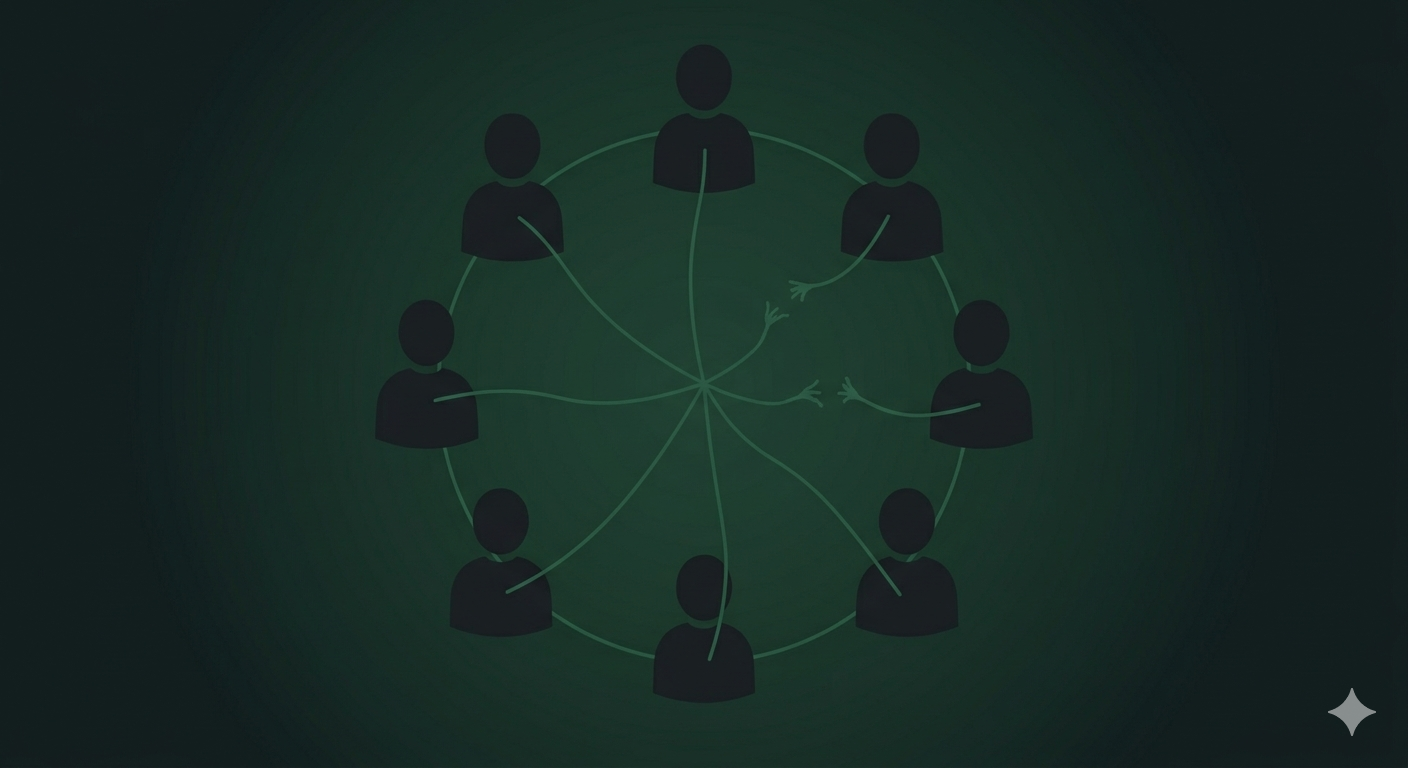
And yet — despite growing up in the era of M-Pesa, despite having smartphones in their pockets, despite running everything else digitally — most of these chama leaders are still managing their groups’ money on paper. On WhatsApp. In notebooks that get lost. On memory that gets disputed.
The Problem M-Pesa Didn’t Solve
Here is a clarification worth making before going further: M-Pesa is excellent at what it was built for. Sending money between two people or between a person and a business is exactly what it does, and it does it better than almost anything else in the world.
What M-Pesa was not built for is group savings management. And the distinction matters.

-
“Did I pay in November or not?”M-Pesa shows individual transaction history — not group ledgers. There is no shared record. No group dashboard. No way for all members to see the same data at the same time.
-
The secretary is drowningOne person is manually tracking contributions for 12, 20, 30 members. Cross-referencing M-Pesa screenshots. Building spreadsheets nobody else can read. This is how groups lose their best administrators.
-
Delayed payoutsWhen the payout has to be collected, counted, and physically delivered — or when someone has to manually aggregate contributions before sending — timing slips. Recipients wait. Resentment builds.
-
Trust breaks downWhen records are inconsistent, accusations follow. Not necessarily because anyone stole anything — but because nobody can prove they didn’t. Ambiguity is the enemy of collective money.
-
Groups dissolveNot from lack of will. Not from lack of commitment. From lack of system. The chama culture is strong. The infrastructure it runs on is still 1992.
This is a solvable problem. It has been solvable for years. The reason it persists is not technological — it is adoption. The right tool needs to land in the hands of the people who run these groups.
What M-Pesa Built — And What the Chama Needs Next
Consider what M-Pesa actually demonstrated over eighteen years. It showed that Kenyans will adopt a digital financial tool if it is simple, if it works on the hardware they already have, and if it solves a real and immediate problem. The conditions for adoption are understood. The model is proven.
The chama needs a layer on top of M-Pesa that does what M-Pesa cannot: manage the group. Track who has contributed and who has not, with timestamps. Automate the reminders so nobody has to be the awkward follow-up person. Manage the rotation. Process payouts digitally. Give every member equal visibility into the same record.
“The chama is too important an institution to keep running on WhatsApp screenshots and a notebook someone’s dog ate once.”
— Nnalolile For BusinessThe discipline of the chama culture is not the problem. Kenyans have been pooling money together across generations without being told to. The social accountability that makes chamas work — the fact that your group can see your contribution status, the fact that your turn is coming and you know it — this is one of the most powerful savings mechanisms in the world.
The friction is administrative. And friction is what technology is for.
How M-Pesa’s Journey Got Here
My OneApp — Safaricom’s Bet on What Comes Next
In April 2026, at the Decode 4.0 summit, Safaricom officially unveiled My OneApp — a unified digital platform merging the M-PESA app and MySafaricom into a single interface. The ambition is substantial: consolidate 6.7 million M-PESA app users and 2.8 million MySafaricom users into one AI-first operating system with scan-to-pay, NFC, and a third-party mini-app ecosystem.
Search interest in My OneApp spiked sharply at launch in early April 2026 — then spiked again in mid-April when the friction of forced migration became visible. Users arriving from the separate apps found their saved favourites missing, diaspora users hit a wall requiring a Safaricom SIM and local mobile data for initial setup, and app store reviews filled with reports of slowness, freezing, and login failures. The volume of “how do I go back?” searches told a story the press release didn’t.
This is the tension that defines every major platform transition: institutional ambition versus user experience. Safaricom’s strategy is coherent — an AI-first super-app built on the infrastructure that already has 99% of Kenya’s mobile money volume. The execution gap is real and documented. These things are not mutually exclusive.
What My OneApp does not change is the underlying group money problem. Whether you send a contribution via the old M-PESA app, the new My OneApp, or any interface that Safaricom builds next — the payment is still one person to one account. The group ledger, the rotation, the shared visibility, the automated reminder — none of that arrives with the super-app. It still requires a layer that is purpose-built for group savings.
That is still what OneKitty is for.
OneKitty — The Layer That Was Missing
OneKitty is a digital platform built specifically for Kenyan savings groups. It does not try to replace M-Pesa — it integrates with it. Members pay contributions via M-Pesa. Payouts land in M-Pesa. OneKitty manages everything in between: the records, the reminders, the rotation, the dashboard, the history.
This is the architecture that the chama has always needed and never had.
What OneKitty understands — and what a lot of Western fintech misses — is that the chama’s power is social. The platform does not try to restructure how Kenyans think about group savings. It removes the friction so the existing logic can work without the administrative damage.
The transparency is the point. In a group where every member can see the same data in real time, disputes about contribution history become impossible. The question “did I pay in November?” has a timestamped answer. The question “whose turn is it?” has a public record. The question “where is the money?” has a dashboard.
Who Should Be Using This
If you are running any form of group savings in Kenya — a traditional chama, an investment club, a church welfare fund, a family savings pool, a workplace welfare group — OneKitty is worth setting up before your next contribution cycle begins.
The platform is easiest to adopt when the group is small. A six-person chama has fewer entrenched habits to shift than a sixty-person one. The administrative overhead of manual management is already low — which makes the transition to digital feel optional. It is not optional. It is prevention.
A six-person group loses money to confusion just as easily as a sixty-person one. The disputes that dissolve chamas do not require large numbers. They require ambiguous records. OneKitty removes the ambiguity before the ambiguity removes the group.
Get Your Chama on Digital Infrastructure.
OneKitty gives your savings group what M-Pesa was never built to give it: a group ledger, automated reminders, transparent payout management, and a shared dashboard every member can see. Set up your group before your next contribution cycle.
Get Started at OneKittyAffiliate link — Nnalolile For Business may earn a commission if you sign up through this link. Your pricing is unaffected. We recommend OneKitty because we believe in the product, not because of the commission.
Why We Recommend This — Personally.
We don’t usually tell you why we trust a platform. We tell you what it does and let the feature list make the argument.
This time the argument is personal.
The University of East London granted an 80% scholarship toward this MSc in Business Psychology — the same degree that has become the content spine for our Unicaf editorial elsewhere on this site. Generous. Still not free. What remained was a balance the scholarship doesn’t touch, and a deadline that doesn’t negotiate.
So we opened a kitty. Same platform we’ve spent this entire post telling your chama to trust. We put our own tuition where our recommendation is.
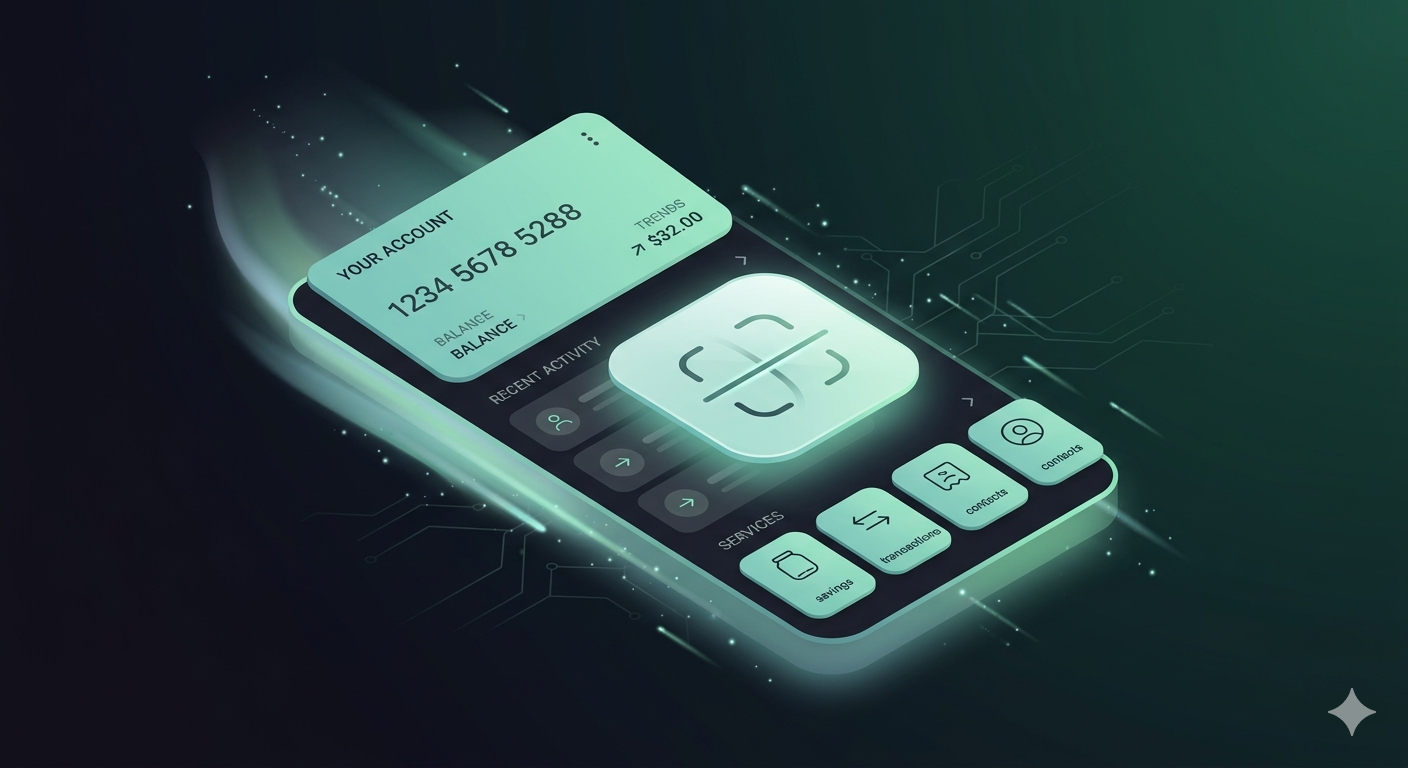
Payments can be routed directly toward the school account. One contributor, somewhere in that stack of names, gave without leaving one — just a nickname, no profile, no public claim to the gesture. We will never know who they are. They will never ask us to.
Pay via M-Pesa — same as everything else in this post.
Contribute to the FundThat’s not how mimetic desire usually works. Recognition is normally the point — we imitate, we contribute, we want it seen. This contributor wanted the opposite: to give and disappear. A system built around visible contribution quietly made room for someone who refused to be visible at all.
If OneKitty is good enough to carry our own tuition, it’s good enough to recommend to your chama. That’s the whole pitch. Everything else in this post is just detail.
Frequently Asked Questions
OneKitty is a dedicated digital platform for Kenyan chamas and savings groups. It handles contribution tracking, M-Pesa integration, automated reminders, payout management, and group dashboards — replacing paper ledgers and WhatsApp-based records with a transparent, timestamped digital system that all members can access.
M-Pesa can send and receive money for a chama, but it does not manage the group structure — contribution rotation, payout schedules, member records, or dispute resolution. A dedicated tool like OneKitty is needed to handle group savings management on top of M-Pesa’s payment infrastructure. They are complementary, not competing.
Kenya has over 300,000 registered chamas, collectively holding billions of shillings in informal and semi-formal savings. The vast majority still operate without digital management tools, relying on notebooks, WhatsApp groups, and elected secretaries to track money that deserves better infrastructure.
Most chama failures stem from financial disputes rooted in absent or inconsistent record-keeping — not dishonesty. When money is tracked manually, contributions get disputed, secretaries burn out, and trust breaks down. Digital tools that create transparent, timestamped records visible to all members address the root cause rather than the symptom.
OneKitty offers plans for groups of different sizes. Visit onekitty.co.ke via our affiliate link for current pricing. We recommend checking directly — pricing and plan structures update and are best confirmed on their site. What matters most: your group’s financial records are worth the cost of professional infrastructure.
Nnalolile For Business is in an affiliate partnership with OneKitty. This means we may earn a commission when you sign up using our links. The commission comes from OneKitty — not from you. Your pricing is unaffected by whether you use our link or go directly. We recommend OneKitty because we believe it serves our readers, not because of the commission structure. Questions about our affiliate standards? Read our editorial policy or DM us directly. — Atoto & Atori.
Affiliate link — commission earned at no cost to you.
Leave a Reply