


We broke down how Kenyan internet users started protecting their attention — and what that means for brands still chasing reach. This post picks up exactly where that one left off.
The Attention Economy in Kenya showed you the retreat.
People stopped posting for everyone.
They went private.
Close friends.
Communities where they could actually breathe.
That shift was not a vibe — it was a signal. And this is what that signal leads to.
When people stop broadcasting to strangers and start talking to people they trust, those conversations become the most commercially powerful spaces on the internet. And right now, most businesses have absolutely no idea those spaces exist.
1 — So Where Are These unseen digital Communities? Cloud People
Not on your competitor’s ad dashboard. Not in the impressions report your agency sent you. They are in the places people choose to show up — not where the algorithm drops them against their will.
WhatsApp Groups
- Kenya’s real internet.
- Product warnings,
- restaurant reviews,
- business scam alerts — all circulating here, fast, completely out of sight of any brand.
- High trust.
- Zero noise.
TikTok Comments
Wildly underrated community layer. I had to learn the hard way. We had to bridge that gap with one girl, Teresia.
Real-time peer consensus forming in public.
“Don’t buy from them, go to @xyz instead” lives here — and it converts harder than any sponsored post.
Facebook Groups
The feed is on life support.
The groups?
Fully alive. SME Kenya, property, parenting, personal finance — high-intent, deeply active, and paying attention to everything.
Reddit & Niche Forums
The honest internet. People say what they actually think. And Google loves surfacing these conversations right when your potential customer is mid-search.
Discord Servers
Tech, finance, fashion, creative industries — tight, curated, genuinely engaged. These communities know the difference between a brand contributing and a brand infiltrating.
Telegram Channels
Fast-moving, high-trust.
Information travels here before it hits mainstream.
Especially sharp in fintech, trading, and Kenyan professional networks.
Every single one of these has the same architecture:
trust flows between members, not from brand to consumer.
No amount of paid posts rewires that. You either earn a seat at the table or you do not exist in the room.
A recommendation inside a WhatsApp group of 200 people who know each other outweighs a KES 150,000 campaign that nobody asked for.— This is not a take.
This is how decisions actually get made.

2 — The Ghost Problem: You Paid for an Empty Room
Let’s say the thing nobody wants to say out loud in the Kenyan digital marketing scene.
A significant chunk of the “audiences” businesses paid to build are fake.
Bots.
Purchased followers that inflate the numbers and do absolutely nothing else.
The market for this has been running in plain sight for years. KES 3,000 for 10,000 Instagram followers. Delivered in 48 hours. Very impressive.
Completely worthless.
49%
of marketers globally admit working with influencers who had fake followers
$1.3B
lost to influencer fraud globally every single year
3–5×
higher purchase intent from genuine community word-of-mouth vs. paid ads
Here is the real damage.
It is not just that you spent money talking to bots.
It is that real people noticed.
A business with 60,000 followers and 14 comments per post reads as fake immediately to anyone paying attention — and the people inside Kenyan online communities are very much paying attention.
The manufactured following doesn’t just fail to build trust.
It reverses it.
Now you are not just a brand trying to sell.
You are a brand that lied about who you are.
Communities remember that.
This Happened in Kenya
A local beauty influencer got publicly called out in a TikTok thread for bought followers.
Three brands she had partnered with took the collateral damage by association. None of them knew.
That is the tax on fake engagement — you pay it even when you did not buy the fakes yourself.
3 — Ads Are Not the Enemy. Ads Alone Are.
Let’s be precise because this gets misquoted.
The argument is not that advertising is dead.
The argument is that advertising as your primary strategy is burning money in 2025.
Ad fatigue is structural.
The average person encounters thousands of ads daily. The brain built a near-perfect filter for it.
You scroll past.
You skip at three seconds.
You install an ad blocker — over 40% of internet users already have, and among 18–34 year olds the figure runs significantly higher.
Trust in advertising sits at historic lows globally.
In Kenya, where peer recommendation and community word-of-mouth has always been the dominant commercial trust signal — mkono wa kukopesha logic applied to the internet — ad scepticism is not an imported attitude.
It is locally native and deeply held.
What changes the maths is community context.
An ad inside content a community already trusts performs completely differently.
A creator whose audience genuinely rates them.
A newsletter people actively chose to subscribe to.
The medium is not the message anymore — the trust of the surrounding community is.
Put your budget where that trust already exists.

04 — The Influencer Economy Broke Itself.
UGC is the Fix.
Influencer marketing was supposed to close the trust gap.
Real people, relatable voices, community-native promotion. For a while it worked beautifully.
Then the numbers got big enough to corrupt the model.
Macro-influencers hit fees that made them behave like broadcast media. The community trust that made influencers valuable in the first place started leaking out.
And the audience noticed.
They always notice.
What is replacing it — and correcting it — is UGC:
User Generated Content.
Not paid.
Not briefed.
Ordinary people posting because they had an experience worth sharing.
A 45-second TikTok about a Nairobi delivery service that actually showed up.
An honest unboxing that was not staged.
A review that sounds like a human being and not a marketing brief.
Real.
Unscripted.
Trusted at a level no ad spend can replicate.
The UGC shift in practice:
Micro-creators with 1,000–20,000 highly engaged niche followers now consistently out-ROI macro-influencers.
But genuine UGC from an ordinary customer with no “creator” identity? That outperforms both.
The community reads authenticity instantly. And it shares. You cannot manufacture that loop — you can only earn it.
The businesses winning right now are not commissioning all their content. They are creating conditions for customers to generate it — obsessive product quality, service that earns the story, packaging worth filming.
Then they amplify what the community already built.
That loop — experience → UGC → community amplification → new customers — does not stop when the budget does.
5 — Organic is the Slow Build That Beats Everything Long-Term
Organic is not the free option for businesses that cannot afford ads. It is a fundamentally different asset class.
Ads are rented attention.
Organic is owned trust.
And owned trust compounds.
A piece of content that genuinely answers a question a Kenyan entrepreneur is typing into Google today does not expire when your budget does.
It sits.
It gets found in month seven by someone who was never going to see your Facebook ad. It gets dropped into a WhatsApp group by someone who found it useful. It becomes the link a potential client sends to their business partner before they book a meeting with you.
Paid advertising stops the moment you stop paying.
The community conversation it never entered keeps going without you.
— Build the thing that does not switch off.
50 genuinely useful pieces of content over two years equals a permanent commercial asset.
The same budget in Meta ads over two years equals 730 days of reach with nothing left standing when the campaign ends. That is the decision every young business owner in Kenya is actually making, whether they frame it that way or not.

6 — The Silent Majority is Actually Running Things
Here is the part that should change how you think about your entire digital strategy. The people making the real decisions about your business — whether to buy, hire, recommend, or quietly avoid you — are mostly not the ones you can see.
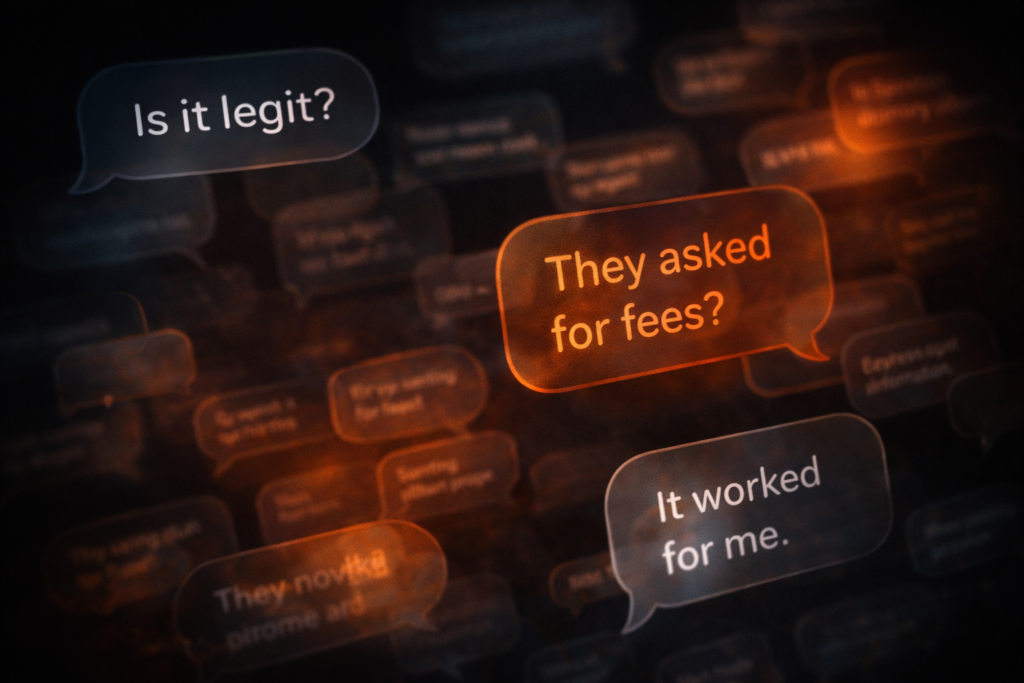
Online communities operate at roughly a 90/10 split. About 10% actively post, comment, and engage visibly. The other 90%? They read everything. They absorb the reviews. They scroll the comment threads. They sit in the WhatsApp group where someone asked if your business is legitimate and three people responded. They process all of it — and then they decide. Without leaving a single trace you can track.
This is the customer your feedback form will never reach. They are not filling in a survey.
They are not sending a complaint email.
They will simply leave, or stay, or quietly tell three people in a group chat something that spreads faster than any campaign you could run.
And you will never see it happen in real time.
The ConsequenceYour business reputation is being built — or buried — in conversations you are not in, by people who will never reach out directly.
The question is not whether this is happening.
It is whether anyone is listening on your behalf before the decision is already made.
Why Nnalolile Exists?
We Look.
We Listen.
We Learn.
So You Don’t Miss It.
Nnalolile — we look — was built for exactly this gap. The silent majority making grave commercial decisions without ever engaging businesses directly deserve to have their voice carry weight in the market.
And the businesses that want to be on the right side of those decisions need someone actually in the room.
Honest experiences.
Real reviews.
Fact-led editorial that serves the community, not a brand’s paid agenda.
That is the space Nnalolile occupies — between what businesses say about themselves and what communities actually believe.
The market is always talking.
About you.
Without you.
The only question is whether you know what it is saying before it is already too late to matter.
Leave a Reply