


While Macron Flew to Nairobi,
Sam Was Already Building.
The Africa Forward Summit brought €23 billion and two presidents to validate what Nairobi’s builders already knew. Samuel Ralak has been quietly proving the argument from the inside — with Hadithi, an AI publishing tool built for professionals who think in public, built by a Kenyan software engineer who refuses to import Silicon Valley assumptions.

On May 11–12, 2026, Presidents Macron and Ruto co-hosted the Africa Forward Summit in Nairobi — the first time this forum has been held outside France or a Francophone nation. €23 billion in investment. Bilateral agreements on AI, connectivity, energy, and talent. The world’s most powerful diplomatic signal yet that Nairobi is the continent’s leading technology capital.
It was a significant week. But the story we want to tell is not about what flew into Nairobi from Paris. It is about what was already being built here — by someone who didn’t need a summit to tell him the moment was real.
Samuel Ralak is a software engineer and AI developer based in Nairobi. He is also the technical architect behind the Nnalolile × YVI platform — the infrastructure that powers this editorial. For the past year, alongside his work here, he has been building something of his own: Hadithi. And the week that global capital arrived in Nairobi to validate what African builders have been arguing, we think it’s the right moment to put Ralak’s work on the record.
The Problem Ralak Identified

Every AI writing tool on the market makes the same promise: it will capture your authentic voice, at scale, forever. Feed it samples. Set a persona. Publish more.
Ralak spent long enough working with these tools — and building with AI — to understand why that promise is structurally false. He wrote about it directly:
Voice is a system, not a setting. You can’t capture it with a single persona prompt. It lives in sentence structure, rhetorical patterns, vocabulary choices, humor placement, how someone opens and closes a piece, what they emphasize and what they skip. It’s dozens of interacting signals.Samuel Ralak — samuelralak.com
This is not a modest caveat buried in a FAQ. Ralak leads with it. It is his product thesis. And it changes everything about how Hadithi is designed — because if voice is a system of dozens of interacting signals, then the goal cannot be full voice replication. It has to be something more honest: getting the professional close enough to a publishable draft that the gap between AI output and their actual voice is small enough to close in a single edit pass.
What Hadithi Is
Hadithi — Swahili for story — describes itself as a thinking partner for publishing. Not a content generator. Not a ghostwriter. A thinking partner. The distinction is deliberate, and it is grounded in a precise reading of where the blank page actually defeats professionals who have real things to say.
The anchor line on the Hadithi landing page is:
“I know what I think. I just never know how to start writing about it.”The professional Hadithi is built for
That’s the problem. Not productivity. Not scale. The specific paralysis of the blank page for people who are not short on ideas but are short on a system for externalising them. The tool is structured around six steps, each one a direct response to a specific failure in existing tools:
Why the Summit Context Matters for This Story
The Africa Forward Summit produced a bilateral agreement specifically targeting AI, cybersecurity, and data systems for Kenya. A KSh 5.6 billion STEM complex at the University of Nairobi. €23 billion in co-investment structured as partnership, not aid. The Macron–Ruto framing of a “partnership of equals” built around “bankable projects.”
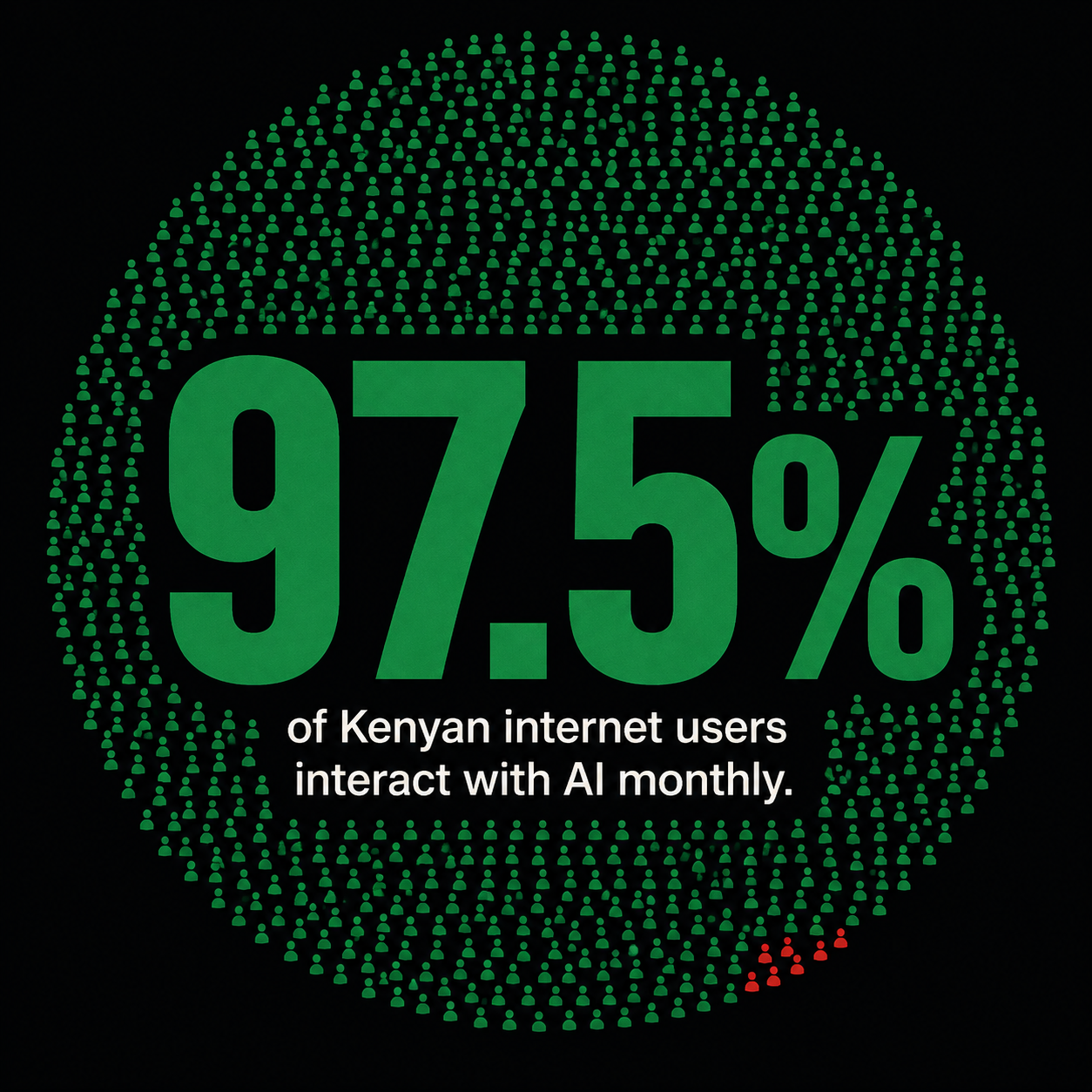
This is the ecosystem Hadithi is being built into. Not Silicon Valley. Not a European capital. Nairobi — the city that leads the world in AI engagement, that is now receiving the infrastructure investment to match that engagement, and that is producing builders like Ralak who understand both the technology and the specific context of the people who will use it.
The Nnalolile Position
We don’t feature Hadithi as an affiliate product. There is no commission attached to this recommendation. Ralak is Nnalolile’s technical co-creator — the person who built the infrastructure you are reading this on — and Hadithi is his independent work, which we believe deserves an audience.
The editorial argument is straightforward: the Nnalolile reader — the Kenyan founder, the Nairobi professional, the SME operator who has expertise and perspective but no publishing habit — is exactly the person Hadithi is built for. The tool was designed from the inside of this context, by someone who lives inside it. That matters more than any feature list.
Hadithi is currently in invite-only alpha. Beta access is free. The waitlist is open.
- Research that grows with you — nothing resets between posts; every session accumulates
- Voice matching from your writing samples — not generic AI filler; your pacing, your vocabulary, your openings
- LinkedIn, X/Twitter, Blog — each with its own editor; one workflow, every platform
- Informed, not just generated — you see what others are saying before you weigh in; that confidence shows in the writing
- Calendar and scheduling built in — the habit is the product; one post without the next one is not a content strategy
Read Ralak’s full argument on voice and AI: Voice Is a System, Not a Setting — samuelralak.com
Leave a Reply