
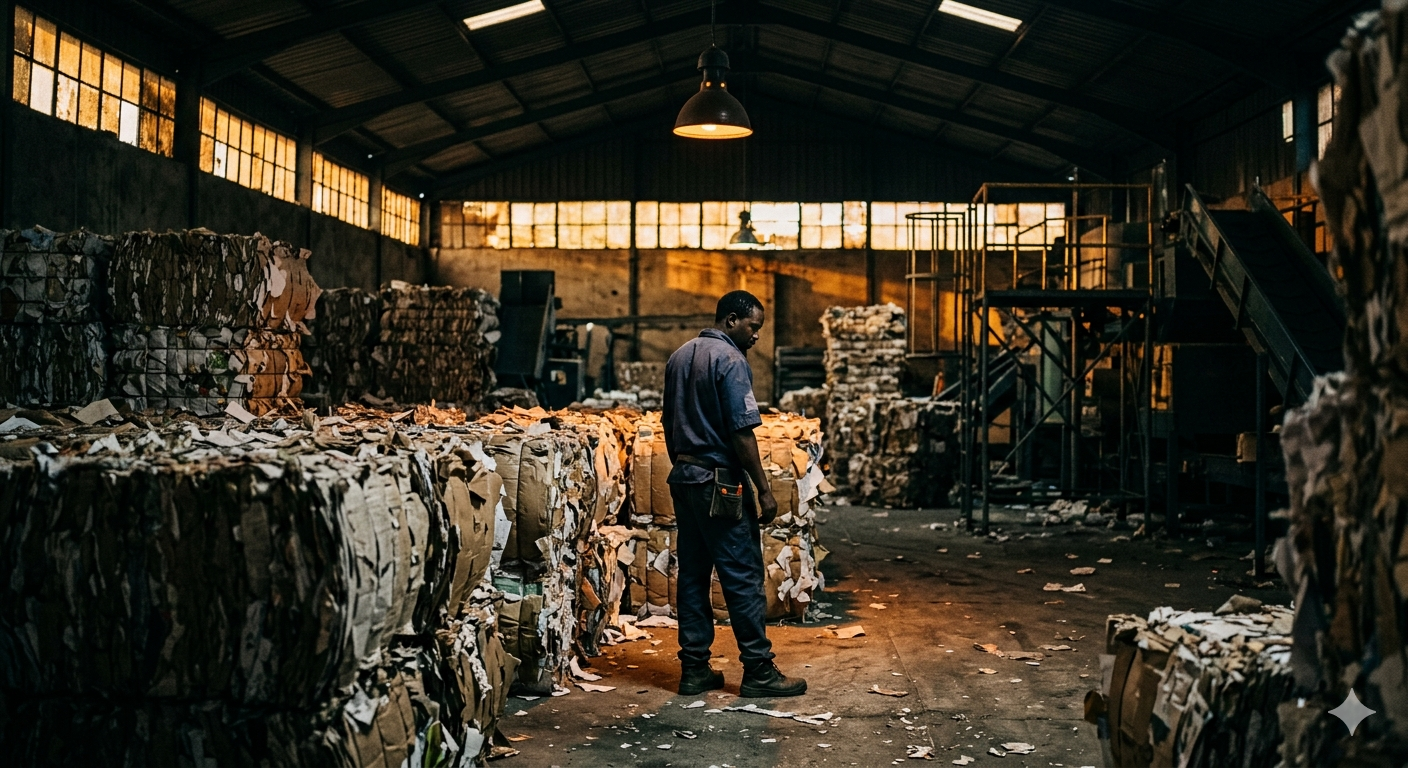

There is a version of the Nairobi story that gets told constantly.
The startup story.
The app, the platform, the pitch deck, the valuation.
It is a legitimate story — but it is not the only one, and it is not even the most important one.
The more important story — the one that employs more people, moves more goods, and builds more durable wealth — is happening in warehouses, on factory floors, and along supply chains that most editorial coverage walks straight past.
Kuzana is a Nairobi-based accelerator that combines a $20,000 equity investment and up to $100,000 in working capital with a 12-week operational support programme.
It targets Kenyan SMEs in manufacturing, agri-processing, logistics, retail, and fintech doing Ksh400,000 to Ksh20 million in monthly revenue — and accepts only seven companies per batch.
Kuzana is a Nairobi-based accelerator that combines a $20,000 equity investment and up to $100,000 in working capital with a 12-week operational support programme.
It targets Kenyan SMEs in manufacturing, agri-processing, logistics, retail, and fintech doing Ksh 400,000 to Ksh 20 million in monthly revenue — and accepts only seven companies per batch. That means Nairobi manufacturing SME funding 2026 are eligible.
kuzana accelerator Kenya eligibility requirements for businesses are
- Ksh400,000 to Ksh20 million in monthly revenue,
- operating in a scalable sector,
- between 3 months and 5 years old,
- led by a founder with the ambition to build a Ksh100 million monthly revenue business.

The Business
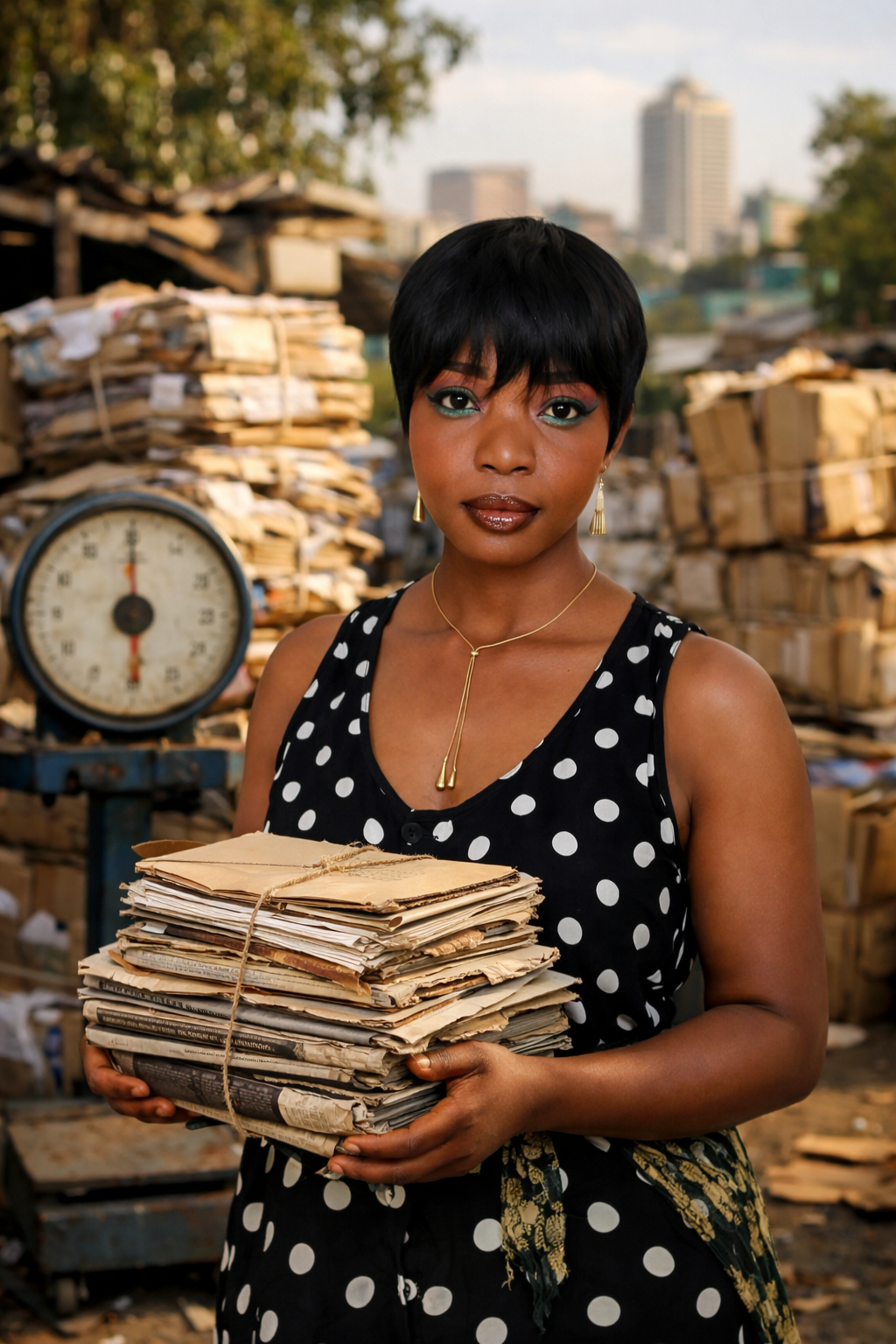
Peter Mayeku has built a waste paper collection, processing, and recycling operation in Nairobi that does something most businesses in the space do not:
it closes the loop.
Where others collect and sell raw waste paper to intermediaries, Mayeku moves up the value chain. It’s a perfect fit for circular economy business opportunities Nairobi.
The company processes what it collects. It has recently opened a tissue processing facility — meaning it now manufactures a finished consumer product from material that the city was throwing away.
That is not a small thing. That is vertical integration in a sector where most players are still trading.
The business is active in urban waste aggregation, sourcing from homes, offices, institutions, and collection networks across the city.
It has been part of the #FagiaNairobi cleanup movement — working at the intersection of environmental action and commercial enterprise long before circular economy became a phrase that marketing departments put on their websites.
The supply chain is real.
The processing facility is real.
The product is real.
The market — tissue and paper products in Kenya, supplied significantly by imports — is real and large.
What This Business Actually Represents
Have you ever wondered how to get equity investment for Kenyan SME?
Kenya generates millions of tonnes of solid waste annually.
The formal recycling and processing sector captures a fraction of it. That gap is not a gap in demand. It is a gap in aggregation infrastructure, processing capacity, and the kind of operational systems that allow a founder-led business to grow beyond what one person can personally manage.
Mayeku has already done what most businesses in this space have not: he has moved from collection into manufacturing. He has built a supply chain. He has positioned the company at the point where raw material becomes sellable product.
What comes next is a function of what resources he can access.
More working capital means larger orders, better input pricing, and the ability to fulfil contracts that are currently out of reach. Cleaner financial systems mean institutional buyers — hotels, hospitals, schools, government agencies — can actually evaluate the business properly.
Operational structure means the founder is not the single point of failure for every decision. Export readiness means the addressable market is no longer just Kenya.
None of these are complicated problems in theory. All of them require capital and expertise to solve in practice.

Why We’re Telling This Story
Nnalolile For Business exists to surface businesses like this one.
Not to hype them — to analyse them. To make the case, clearly and with evidence, for why they matter and what they need to go further.
Part of doing that job properly is knowing which doors to point people toward.
Not every door fits every business. But occasionally a business and an opportunity line up with enough precision that not naming it would be a disservice.
Kuzana is that opportunity for a business at Mayeku’s stage.
Kuzana is a Nairobi-based accelerator and investment programme targeting Kenya’s growth-stage SMEs — specifically the companies that have already proven the model but haven’t yet built the infrastructure to scale it.
- The programme runs 12-week cohorts from Spring Valley.
- It accepts only seven companies per batch.
- Each selected company receives a $20,000 equity investment, up to $100,000 in working capital, and a support structure that includes strategy board formation, export certifications, sales lead generation, twelve months of
- managed accounting,
- free Zoho,
- free Starlink,
- and direct sales coaching.
The eligibility window is Ksh400,000 to Ksh20 million in monthly revenue.
Target sectors include manufacturing, agri-processing, logistics, retail, and fintech.
The stated benchmark for ambition: founders who intend to build the next Bidco or Kakuzi, targeting Ksh100 million in monthly revenue within seven years.
In Batch 1, four of the seven companies doubled their revenue within the 12-week programme.

Why Mayeku Fits
Run Peter Mayeku Waste Paper against Kuzana’s criteria and the alignment is not approximate.
It is specific.
Manufacturing sector.
Check.
Growth-stage revenue.
Check.
Scalable model with a defensible supply chain position.
Check.
A founder who has already demonstrated the strategic instinct to move up the value chain rather than stay in the commodity tier.
Check.
The tissue and paper products market in Kenya is an industrial category.
It has volume, recurring demand, and a domestic manufacturing gap. A vertically integrated processor with the operational capacity to supply consistently — and the certification and financial credibility to sell institutionally — is not competing in a niche. It is competing for a category.
Kuzana’s working capital provision addresses the liquidity gap that constrains growth in processing businesses. We call this:
growth stage funding for kenyan manufacturers
The strategy board addresses the experience gap that constrains decision-making at scale. The accounting and compliance support addresses the credibility gap that constrains institutional sales. The export certification pathway addresses the market size gap that constrains ambition.
Every specific constraint that a business at Mayeku’s stage faces has a named response in what Kuzana provides. That is not a coincidence of wording.
That is what the programme was designed for.
The Broader Point
This piece is not about one company. It is about a category of company.
Kenya has thousands of businesses operating in exactly this register:
past the early survival stage, generating real revenue, working in the productive economy — manufacturing, processing, moving goods, building supply chains — and stuck not because the model is wrong but because the tools available to them do not match the stage they are at.
Microfinance was not designed for this stage.
Commercial bank lending was not designed for this stage.
Conventional venture capital is not looking at this stage.
Kuzana was built for this stage.
The accelerator-plus-equity-plus-working-capital model exists precisely because the mismatch between what these businesses need and what the market offers them is real and persistent.
If you are a founder doing Ksh400,000 or more in monthly revenue — in
- manufacturing,
- agri-processing,
- retail,
- logistics,
- or fintech
— and you have the ambition to be significantly larger than you are today, the Kuzana programme is worth a serious look.
If you know a founder who fits that description, the referral alone is worth up to Ksh 50,000 and you can register here.
And if you are a business like Peter Mayeku Waste Paper Ltd — doing the hard, physical, operationally complex work of building something real in this city — know that the right room exists. You just have to walk into it.
Tell your story
Kuzana accepts applications on a rolling basis. The next cohort is forming now. Eligibility criteria and programme details are at

Frequently Asked Questions
Kuzana’s primary sectors are agri-processing, manufacturing, retail, fintech, logistics, and real estate/construction. These are productive economy businesses, not speculative technology ventures.
Kuzana makes an initial equity investment of $20,000 and can follow on with up to $100,000 in working capital. The application-to-investment period is approximately 3 months.
Kenya’s SME funding gap refers to the financing vacuum between microfinance and venture capital — companies generating Ksh400,000 to Ksh20 million monthly that have proven their model but lack access to growth capital and operational infrastructure. This segment contributes significantly to GDP and employment but is structurally underserved by existing capital providers.
Kuzana requires companies to be operating in Kenya. Workshops are held every Friday at its Spring Valley, Nairobi office. Founders outside Nairobi should factor in the commitment to weekly in-person sessions during the 12 week programme.
Kuzana runs 12-week cohorts of up to seven companies. Each company receives a $20,000 equity investment, access to up to $100,000 working capital, weekly workshops, a strategy board member, export certification support, sales lead generation, managed accounting, free Zoho software, and free Starlink connectivity. Kuzana takes an equity stake and partners with companies long term.
Leave a Reply