Workforce · Education · Unicaf Affiliate Series
Nairobi’s Gig Workers Don’t Have a Skills Problem. They Have an Access Problem.
Five years of real experience and zero leverage to show for it. The gig economy doesn’t punish a lack of ability — it punishes a lack of paper that proves it.
Nnalolile For Business·Affiliate Editorial·8 min read
Nairobi, any weekday morning. The gig economy is already running. So is the question of where it leads.
Walk past Kencom on any weekday morning and you will see the gig economy before you see anything else: boda riders queued three deep, delivery cyclists checking their phones for the next drop, a freelance graphic designer pitching a logo concept to a client over a matatu window. This is not a side hustle anymore. For a significant share of Nairobi’s working population, this is the job — and it has been for years.
What’s rarely said out loud is what happens after year three or four of doing this well. The boda rider who has built a regular client base. The virtual assistant who has handled four years of someone’s inbox without a single missed deadline. The content creator who has shot, edited, and delivered hundreds of briefs. They are good at what they do. And most of them are still exactly where they started — not because the market doesn’t value the work, but because nothing they’ve done converts into something a bigger client, a formal employer, or an international platform can verify at a glance.
That’s not a skills gap. It’s an access gap — and it’s the gap this piece is actually about.
The Treadmill Nobody Names.
Hustle culture has given Nairobi’s gig workers a powerful story: keep showing up, keep grinding, and the work will eventually speak for itself. For a narrow set of viral, lucky, or extraordinarily networked cases, it does. For most people doing real, competent, daily work, it doesn’t — because the gig economy is structured around tasks, not trajectories. There is no built-in ladder from “good at the gig” to “qualified for the next tier.” You either build that ladder yourself, or you stay on the treadmill.
This is where a strange kind of sameness sets in. Everyone on the treadmill is chasing the same visible markers — more gigs, more followers, more side hustles stacked on top of side hustles — because those are the only signals the system rewards. It’s a crowded race toward identical finish lines. The people who actually move are usually the ones who step sideways into something the rest of the field isn’t competing for: a credential, a qualification, a formal signal that converts effort into evidence.
The Myth
“Gig work doesn’t need formal qualifications — the market only cares about results.”
The Truth
Results matter enormously — until you try to move from task-based gig work into retainers, agency contracts, corporate freelance relationships, or international remote roles. At that point, almost every serious client or employer asks for some form of credential, not because they doubt your ability, but because they have no other fast way to filter risk at scale when hiring someone they’ve never met. A degree isn’t proof you can do the work. It’s proof a stranger can trust you can, before they’ve seen it themselves.
The artefacts of the transition: work records in one hand, an application form in the other.
1 in 4
Nairobi-based gig and freelance workers report losing a client or contract specifically because they lacked a formal qualification the client required — despite having the relevant experience.
What Actually Closes This Gap.
This is where Unicaf enters the conversation — not as a generic “go back to school” suggestion, but as one of the few credentialing routes actually built for someone whose income depends on showing up to gigs, not a lecture hall.
🎓
Accredited online degrees
Bachelor’s, Master’s and MBA programmes through accredited university partners including the University of East London — recognised credentials, not certificates of convenience.
💰
Real scholarships, applied upfront
Up to 80% off standard tuition. Not a loan you carry forward — a discount applied before you pay a shilling, awarded on application merit.
🕐
Built around irregular income, not against it
Fully online, self-paced modules and multiple intake periods a year — designed for people whose schedule is dictated by gigs, not semesters.
In practical terms: you don’t pause the gigs to get the degree. You study between them, around them, in the gaps the gig economy already forces you to manage.
A Note From This Desk.

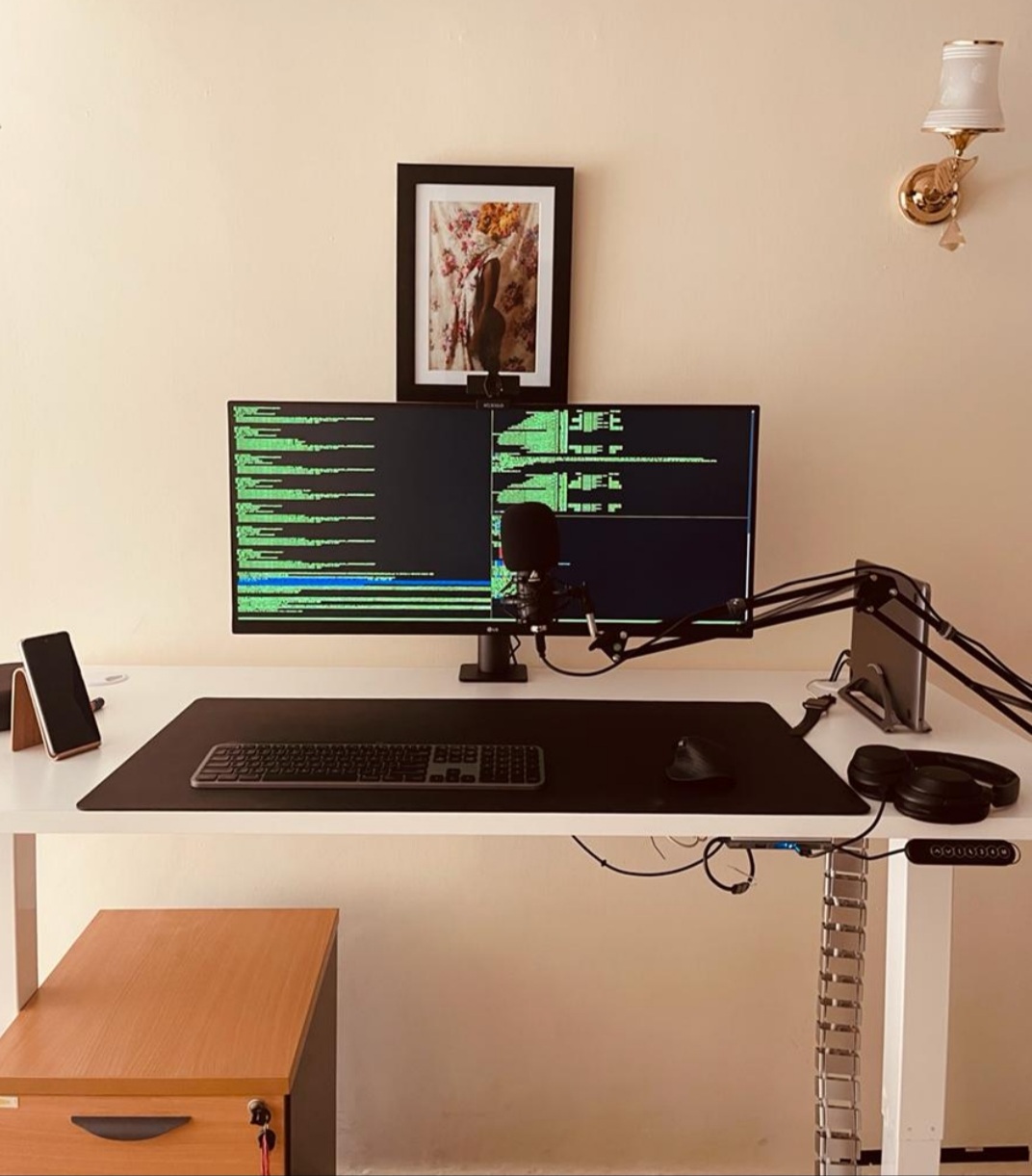
The MSc coursework doesn’t wait for a convenient hour. Neither does gig work. Both run in the margins.
This isn’t a hypothetical case study. The MSc in Business Psychology this publication’s founder is currently completing through the University of East London runs on exactly this scholarship pathway — studied around the same unpredictable editorial and business workload that built Nnalolile in the first place. Some of the analytical frameworks this publication uses didn’t arrive from theory in a vacuum; they arrived from coursework completed at odd hours, between deadlines, the same way most of our readers will have to study if they choose this route. We don’t recommend what we haven’t lived.
Hustle without a credential is a story that ends where it started. The gig economy doesn’t lack effort — it lacks doors. A degree is one of the few keys that fits more than one of them.
— Nnalolile For Business
Getting Started.
1
Choose your programme
Browse Unicaf’s full catalogue and match a degree to where your gig work is already pointing — business, IT, psychology, data, or leadership.
2
Apply online
Submit your ID, highest academic certificate, and a short personal statement. No campus visit, no formal interview required for most programmes.
3
Get your scholarship offer and start
Confirm enrolment, pay the scholarshipped fee, and begin studying on your own schedule — gigs and all.

Nnalolile Recommends
Turn the work you’re already doing into a credential that travels.
Apply to Unicaf through our partner link below. Scholarships are awarded per intake — current gig-economy hours spent waiting for the next job are better spent on an application.
Apply to Unicaf →
This is an affiliate link. If you apply and enrol through it, Nnalolile For Business may earn a commission from Unicaf at no extra cost to you. Full disclosure below.
Frequently Asked.
Can I actually study for a Unicaf degree while doing gig work full time?
Yes. Programmes are fully online and self-paced within term deadlines, so you study around your schedule rather than the other way around. Most working students study early mornings, late evenings, or in the downtime between gigs.
Are Unicaf degrees recognised by Kenyan employers and government bodies?
Degrees are awarded by accredited partner universities, including the University of East London, a UK institution with full degree-awarding powers. Accreditation — not delivery method — is what employers and bodies like the Commission for University Education evaluate.
How much can the scholarship actually reduce my fees?
Scholarships of up to 80% off standard tuition are available, depending on the programme and intake. Exact amounts vary, so confirm current offers directly during your application.
I don’t have a bachelor’s degree yet — can I still start with a master’s?
Entry requirements differ by programme. Some postgraduate options accept relevant work experience in place of a first degree. Unicaf’s admissions team will confirm what you qualify for once you apply.
Does Nnalolile earn anything if I use your link?
Yes — if you apply and enrol through our link, we may earn a commission from Unicaf. Your tuition and scholarship offer are exactly the same whether you use our link or not. We only recommend platforms we believe genuinely serve our readers.
Affiliate Disclosure
Nnalolile For Business is in an affiliate partnership with Unicaf. When you apply through links in this article, we may earn a commission — at no extra cost to you, and with no effect on your scholarship offer. Our editorial recommendations are based on genuine belief in the platform’s value to our readers, not payment to feature it. Scholarship amounts and programme availability are set by Unicaf; verify current offers directly on their site before applying.
Related Reading
We Look. We Listen. We Learn. NNALOLILE YVI.
— Atoto & Atori.



Leave a Reply