

The Rats Are Back in the Streets
Hantavirus is not COVID. But the business lesson is exactly the same — and Albert Camus already wrote it in 1947.
Before the plague came to Oran, the rats came first.
Camus gives us this image in the opening pages of La Peste — a city going about its Tuesday business, and underneath the daily hum, rats crawling out of their holes to die in the streets. The residents noticed. They complained. They reported it. And then, because the economy was running and the cafés were open and nobody had a fever yet, they forgot about it.
This is not a story about rats. It is a story about how we decide what counts as a real problem.
On May 8, 2026, Kenya’s Ministry of Health issued a public health advisory. A virus had emerged aboard the MV Hondius — a cruise ship in the Atlantic Ocean. The virus: Hantavirus. Confirmed cases in Kenya: zero. Risk level to the general public: low.
You will be tempted to stop reading here.
Don’t.
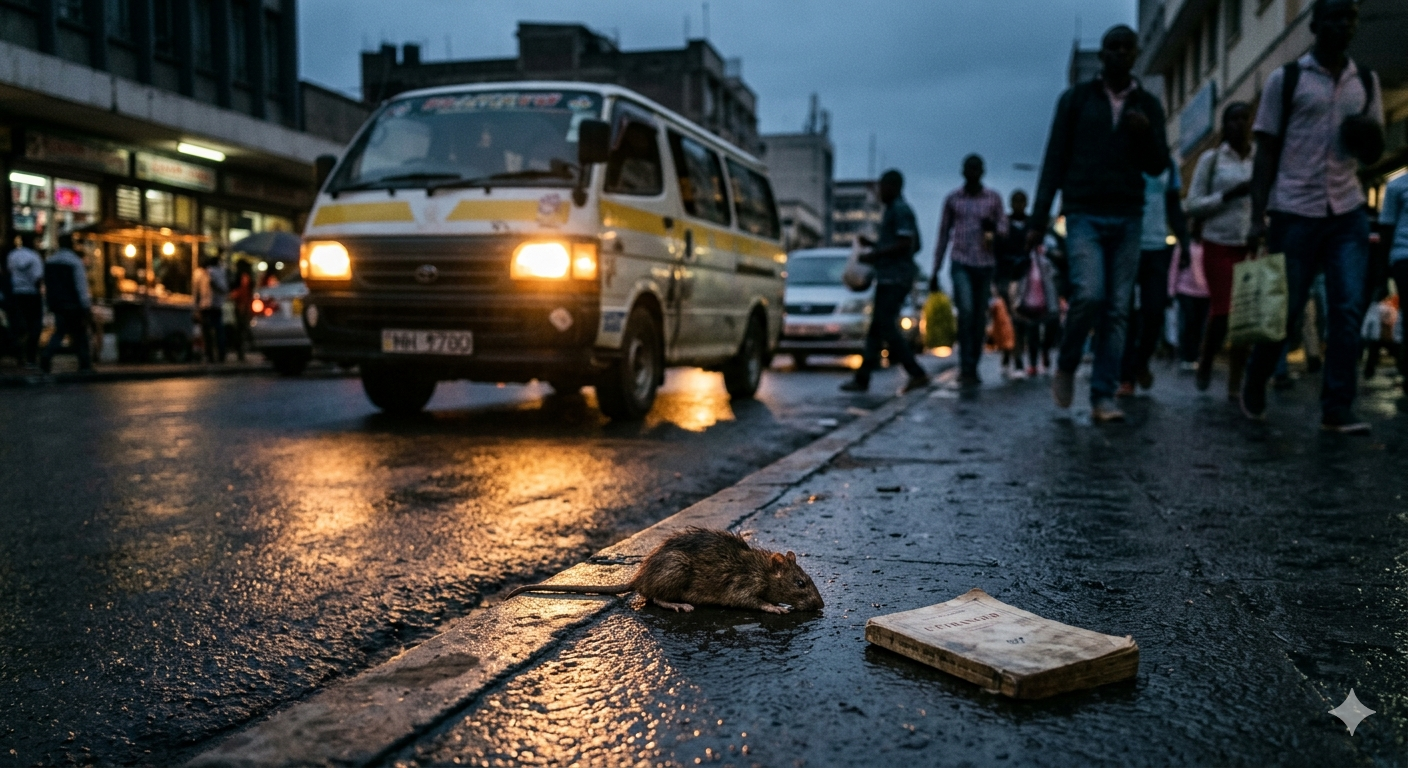
Before the advisory, before the headline — the signal is always already there. Nairobi, 2026.
The plague bacillus never dies or disappears for good; it can lie dormant for years and years in furniture and linen-chests; it bides its time in bedrooms, cellars, trunks, and bookshelves; and perhaps the day would come when, for the bane and enlightening of men, it would rouse up its rats again and send them forth to die in a happy city.
— Albert Camus, La Peste (1947)
What Hantavirus actually is
First: the name. Hantavirus is named after the Hantan River in South Korea, where the virus was first isolated in the 1970s from the striped field mouse. It came to global attention in 1993 when an outbreak in the Four Corners region of the United States — infecting young, otherwise healthy Navajo adults — was eventually traced back to infected rodent droppings in their homes. It was not a new virus. It was a known animal virus that had quietly found a human pathway. That distinction matters.
Hantavirus is not new, not mysterious, and not COVID. It is a zoonotic disease — meaning it lives in animals and, under the right (wrong) conditions, finds its way to us. The primary vector: rodents. Rats, mice, shrews. The main transmission route: inhaling dust contaminated with infected rodent urine, droppings, or saliva. Rodents represent 42% of the world’s mammalian biodiversity, populating every continent except Antarctica, and are documented reservoir hosts for a wide diversity of disease agents — hantavirus prominent among them.[1]
It does not spread the way COVID spread. COVID was a respiratory virus optimised for human-to-human transmission. It moved at the speed of conversation — a shared matatu, a packed office, a family dinner. The global economy was not built for that kind of enemy, and we paid accordingly.
Hantavirus has a different architecture. Most strains do not pass easily between people. It is a disease of proximity to rodents — of poor waste management, grain stores, dusty warehouses, homes in flood-prone corridors where rodent populations surge. The one notable exception: the Andes virus strain has demonstrated limited person-to-person transmission capability, which is precisely why the MV Hondius outbreak is being watched so carefully. A cruise ship is a floating city. Shared air, limited exits.
In the Kenyan context, the threat profile is different. And, for that reason, arguably more useful to think about clearly.
meaning exposure has been happening quietly, for years.
The science Kenya has not been told
Here is the part most health advisories skip over, probably because it sounds more alarming than “risk level: low.”
Hantavirus has been in Kenya for years. Silently.
A 2023 study found hantavirus RNA in Somali shrews in Baringo County. An earlier study identified a separate strain in African wood mice in the North Rift Valley. And in Kibra, Nairobi — one of the city’s densest urban settlements — approximately 8.1% of residents tested positive for hantavirus antibodies. They had been exposed. Most, in all likelihood, had no idea. This pattern of quiet, multi-species circulation mirrors findings from across the broader region: a systematic survey of rodent populations across Cambodia, Lao PDR, and Thailand detected hantavirus IgG antibodies in nine distinct rodent species, with site-level seroprevalence ranging up to 5.6% — and crucially, seropositive animals appearing more frequently at sites with lower biodiversity, exactly the kind of compressed, species-poor urban environments Nairobi’s informal settlements represent.[2]
This is the Oran moment. The rats have been dying in the streets for years. We just had not called it that yet.
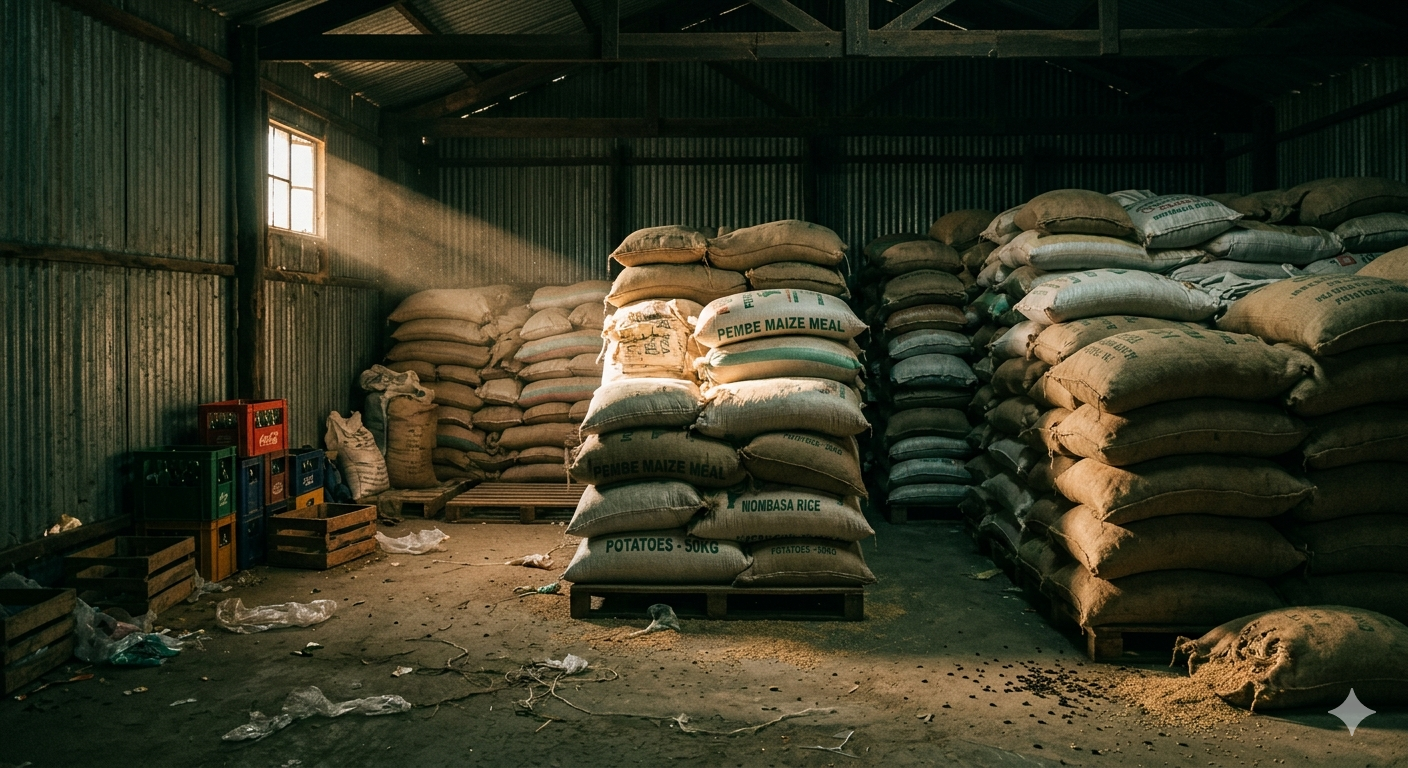
The dusty warehouse, the chewed sack, the floating particles — the transmission route was always here. For businesses in food storage, logistics and agriculture, the risk is not theoretical.
COVID vs. Hantavirus: what your business actually needs to compare
The temptation, when a new health alert arrives, is to run the COVID comparison and either catastrophise or dismiss. Neither is useful. What is useful is a precise read of the difference in risk architecture — and what that means for operations.
- Airborne, human-to-human
- Global supply chain collapse
- Forced remote work across all sectors
- Decimated hospitality, retail, events
- Required systemic, society-wide response
- No pre-existing operational playbook
- Rodent-to-human primarily
- Sector-specific operational risk
- Does not disrupt white-collar work
- Targets food, agriculture, logistics, storage
- Requires targeted sanitation protocols
- Prevention is existing best practice
The risk scale is not comparable. But the pre-emptive logic is identical. The businesses that survived were the ones that treated uncertainty as an operational variable — not an event to wait out. A 2024 ecological modelling study confirmed that hantavirus carries documented animal-to-animal, animal-to-human, and human-to-human transmission pathways — and that geographic proximity and ecological overlap between rodent species are the primary predictors of spillover risk, not dramatic outbreak events.[3] In other words: the risk accumulates quietly, in the background, in exactly the kinds of environments Kenyan SMEs operate in every day.
Hantavirus, right now in Kenya, is not going to shut down Nairobi. But “low risk” is not the same as “no exposure.” And for specific business sectors, the exposure is real and present — it has been for years. We just did not have a name on the advisory.
Who carries actual operational exposure
- 01 Food businesses with storage facilities — particularly grain, produce, or any material that attracts rodents. This is not hypothetical. Rodent infiltration of food stores is a documented, ongoing challenge across Nairobi’s informal market infrastructure.
- 02 Agricultural operations and cooperatives — farms, produce aggregators, storage hubs. The North Rift Valley strain identification is directly relevant here.
- 03 Recycling and waste management — rodent-dense environments by definition. If your business model touches waste, the risk profile is elevated.
- 04 Logistics and warehousing — particularly businesses whose goods move through older infrastructure or informal markets. Dust disturbed in old storage is the key transmission vector.
- 05 SMEs in dense urban settlements — the Kibra antibody figure is not a Kibra-only story. It is a data point about what happens in environments with high rodent activity and proximity. If your business operates in or adjacent to similar conditions, this applies.
This is a sanitation and operations audit.
What Dr. Rieux would tell your board
Bernard Rieux is Camus’s plague doctor. He does not wait for certainty. He does not wait for the bureaucrats to officially name the problem, for the newspapers to validate his concern, for the death toll to justify the cost of action. He acts on what the evidence suggests is true — not what it has yet fully confirmed.
The Ministry of Health, to its credit, is doing exactly this: early surveillance, border monitoring, proactive advisory. No drama, just protocol. Director General Dr. Patrick Amoth intensifying checks at airports and seaports while there are zero domestic cases is precisely the right response. Rieux would approve.
Your business should operate on the same logic.
- Audit your storage. Rodent-proof containers for food and supplies are not an overreaction — they are infrastructure.
- Train your team on the difference between sweeping and disinfecting. Do not sweep or vacuum rodent droppings — wet the area with bleach solution first. This is a procedure that costs nothing.
- Know the early symptoms: fever, severe muscle aches in the thighs and hips, fatigue, headaches. Know that the dangerous escalation — fluid in the lungs — arrives 4–10 days later. Anyone presenting these symptoms after working in a rodent-adjacent environment needs medical attention, not paracetamol and rest.
- Review your waste disposal protocols. What your business does with its waste determines what visits it in the night.
- Follow the Ministry of Health and WHO for updates — not social media, not WhatsApp forwards. Official sources only.
There is currently no specific antiviral cure for hantavirus. Treatment is supportive — oxygen therapy, fluid management, intensive care for severe cases. This is why early detection and prevention are the only real levers. The case fatality rate for Hantavirus Pulmonary Syndrome ranges from 36–50% in documented outbreaks. The business case for sanitation protocols writes itself.
Is there a cure for hantavirus? No. Prevention is the treatment.
These are not new requirements invented by hantavirus. They are the requirements that hantavirus makes visible. Good sanitation was always the answer. The alert is just the occasion to check whether you had actually implemented it.
The real lesson from Camus
Near the end of La Peste, after the plague has lifted and the city celebrates in the streets, Rieux reflects that the plague bacillus never truly disappears. It sleeps in furniture and linen, in cellars and rafters, waiting. And one day — for the bane and enlightenment of men — it would rouse its rats again and send them forth to die in a happy city.
This is not pessimism. This is operational realism dressed in literary clothing.
The question is not whether the next health threat will arrive. It will. The question is whether your business is the kind of organism that notices the rats before they pile up in the streets — or the kind that waits for the official announcement and then scrambles.

Composed intelligence meeting quiet urgency. The Kenyan professional who reads the advisory — and then reads Camus — is the one who acts before the headlines arrive.
COVID cost businesses their existence. Hantavirus, in Kenya, right now, is a low-risk advisory.
The gap between those two sentences is where strategy lives.
Act accordingly.
References
Further Reading
Original Novel
The Plague
Albert Camus
Buy on Amazon →
Companion Edition · Kindle
The Plague: An Exploration of Suffering, Solidarity & Absurdity
SeraShaw Press
Buy on Amazon →
Nnalolile uses affiliate links. Purchases made through these links support independent editorial work at no extra cost to you.
Leave a Reply