
Disclosure:
We have an active OneKitty contribution kitty for our postgraduate tuition. I am also a Unicaf student recruitment partner and an M-Changa affiliate. All three relationships are disclosed under Nnalolile’s standing editorial policy. This post is not sponsored by any fundraising platform but explore postgraduate funding gap kenya.
There is a moment most Kenyans recognise now.
Someone shares a crowdfunding link on a WhatsApp group.
The cause is sympathetic — a hospital bill, a funeral, a school fee gap. The campaign has a photograph, a story, an urgent deadline. And before you contribute, you hesitate.
Not because you are unkind. Because you are not sure.
You have seen the screenshots.
The cancer patient who recovered fully and quietly deleted the campaign page.
The burial fund for someone who was not actually dead.
The medical emergency that was a renovation.
The child’s school fees that funded someone’s side hustle.
That hesitation — that specific, learned, culturally embedded suspicion — is the cost of crowdfunding fraud. And it is not a small cost. It is quietly dismantling one of the most functional informal financial systems Kenya has ever produced.
When I decided to fund my postgraduate tuition gap publicly, I had a choice to make.
- A public campaign — open,
- social,
- built for reach
- and discovery.
Or OneKitty
- — closed,
- relational,
- governance-gated,
- built for groups who already know each other.
This is why.
I chose
What public crowdfunding optimises for — and what it sacrifices
Public crowdfunding platforms have processed billions of shillings in Kenya and enabled fundraising at a scale that was structurally impossible before mobile money.
For legitimate causes with genuine community reach — institutional campaigns, organisational drives, NGO fundraising — they remain powerful infrastructure.
In fact, the major platforms in this space are increasingly positioning themselves to serve exactly that: organisations, corporates, and structured causes rather than individual campaigns.
But public crowdfunding has an architecture problem that no platform policy can fully solve when it comes to individual, personal fundraising.
Public campaigns are designed for strangers.
That is their strength — anyone can discover your campaign, feel moved by your story, and contribute. The friction between cause and contribution is intentionally low. You do not need to know the organiser. You do not need to verify the need. You feel, you act, you move on.
That same low friction is what fraud exploits.
When the barrier to contribution is a sympathetic photograph and a well-written paragraph, the barrier to fraud is also a sympathetic photograph and a well-written paragraph.
Public crowdfunding cannot distinguish between them at the point of discovery.
The verification — if it happens at all — is retrospective: after the money has moved, after the campaign has closed, after the organiser has disappeared.
The platform is not failing.
It is functioning exactly as designed.
The design, it turns out, has a structural vulnerability that scales with the internet’s reach — and one that is better suited to organisational accountability than personal accountability.
The fraud data nobody is publishing cleanly
Kenya does not yet have a comprehensive, publicly available dataset on crowdfunding fraud.
What we have is anecdotal but consistent:
- social media threads,
- investigative journalism pieces,
- occasional DCI statements, and
- the lived experience of anyone who has been in a Kenyan WhatsApp group for more than six months.
The patterns that emerge from that evidence base:
Medical emergency fraud is the most common category — partly because it is the most emotionally compelling, partly because medical costs are genuinely catastrophic for middle-income Kenyan families, and partly because illness is difficult to verify without access to hospital records.
Fraudulent campaigns in this category are sophisticated enough to include real hospital names, real doctor titles, and fabricated but plausible cost breakdowns.
Funeral and burial fraud exploits both time pressure and cultural obligation. The urgency of a burial deadline suppresses the instinct to verify. By the time questions are asked, the ceremony has allegedly happened and the organiser is unavailable.
Education fraud — the category closest to my own fundraising — is growing. School fees, university admissions, scholarship gaps, certification costs.
The narrative is aspirational rather than emergency-based, which means it attracts a different kind of contributor: one who wants to invest in someone’s future rather than rescue them from crisis.
This category is harder to fabricate convincingly but is increasingly attempted because the contributor profile is generous and the verification challenge is real — how do you confirm someone’s Unicaf offer letter is genuine from a WhatsApp screenshot?
The cumulative effect of this pattern is not just financial loss. It is social corrosion.
Every fraudulent campaign makes the next legitimate one harder to fund.
The hesitation I described in the opening of this piece is a rational adaptation to a damaged information environment. But it punishes honesty alongside dishonesty, which is the deepest harm.
The crowdfunding trust kenya 2026 is shifting.

The deeper problem: we have only learned to fundraise for disaster
Before we talk about platforms, there is a cultural design flaw underneath all of this that fraud has made worse but did not create.
In Kenya — and across most of the world’s collective-finance cultures — the harambee instinct activates almost exclusively in the presence of crisis.
Someone dies.
Someone is sick.
Someone’s house burns down.
The community pools.
The money moves.
The need is met.
This is beautiful.
It is also incomplete.
We have built the entire emotional and social infrastructure of collective contribution around the worst moments of people’s lives.
We show up for funerals.
We show up for hospital bills.
We do not, as a default cultural reflex, show up for someone’s degree.
We do not pool for a business launch.
We do not crowdfund someone’s first year of therapy, or their sabbatical, or their creative project, or their professional certification.
How often do we see harambee for growth not grief?
The result is a fundraising culture that is reactive by design.
The public vs private fundraising kenya needs attention.
You must be suffering visibly before the community feels licensed to help.
Aspiration — the desire to grow, to study, to build something — does not have the same social permission to ask.
This is the gap OneKitty’s private, goal-oriented model is structurally better suited to close than any public campaign platform.
When I created my tuition kitty, I was not announcing a crisis. I was announcing a direction. There is no emergency photograph. There is no urgent deadline manufactured to suppress scepticism.
There is a person — with a documented professional history, a published editorial series, and a named learning goal — saying: I am building toward something. If you believe in where I am going, here is how you can be part of the journey.
That is a fundamentally different emotional contract from the disaster-response harambee.
It does not ask for rescue. It asks for investment — in a person, in a narrative, in a future that is not yet certain but is already underway.
The private kitty model holds this kind of positive-occasion fundraising more naturally than a public campaign does, for one simple reason: it is invitation-only.
You are not broadcasting a need to strangers who require an emotional emergency to act.
You are extending an opportunity to people who already know you, already believe in your work, and are already invested in your outcomes.
The relationship creates the context for the ask.
The ask does not have to create the relationship from scratch.
This also means the Pot of Dreams and the kitty are operating on the same emotional logic — just at different scales.
The Pot is how I invest in myself, privately, daily, one folded note at a time.
The kitty is how I invite the people who know my work to invest in the same direction, collectively, on their own terms. Neither instrument requires a catastrophe as the entry condition.
Both are built entirely around the belief that something good is being built — and that belief, sufficiently documented and shared, is enough of a reason to contribute.
Kenya’s fundraising culture will shift eventually. The platforms that position themselves for growth occasions rather than only grief occasions will be the ones that last.
OneKitty has the architecture for it. Whether it builds the cultural narrative around it is a different question — and an editorial opportunity that Nnalolile For Business intends to document as it happens.
Why private changes the accountability structure
OneKitty’s model is not a technological solution to fraud. It is a relational one.
When I create a contribution kitty and invite people into it, I am not asking strangers to trust a story. I am asking people who already know me — who have read this series, who follow Atoto Atori, who are connected to me professionally or personally — to trust a record. The distinction matters enormously.
The contributors to my kitty are not discovering a campaign through a social share algorithm. They are responding to a direct invitation from someone whose work they have chosen to follow.
The relationship precedes the transaction. That pre-existing relationship is the verification mechanism that public crowdfunding cannot replicate.
This changes accountability in three specific ways.
First, the organiser is identifiable.
I am not anonymous. My name, my business, my seven-year professional history, my editorial record — all of it is publicly verifiable. A fraudulent campaign depends on the organiser’s ability to disappear. I cannot disappear from my own brand. The accountability is structural, not promised.
Second, the cause is documented.
I have published my Unicaf scholarship offer context, my enrolment disclosure, my editorial plan for the next twelve months. The fundraising need is not a single sympathetic paragraph — it is the fourth post in a documented series. Fraud depends on narrative isolation: one emotional story, no context, no prior record. The Learning Series is the opposite of that architecture.
Third, the platform has governance mechanisms.
OneKitty allows up to three treasurers per kitty who approve withdrawals. For my kitty, I am transparent about who controls access. The minimum withdrawal threshold of KES 250 means small contributions are accessible but the fund cannot be emptied without a deliberate act.
These are not foolproof protections — no platform mechanism is — but they are friction points that a fraudulent actor would need to navigate, and that a legitimate organiser navigates transparently.
The trust premium of the known quantity
There is an economics concept worth naming here:
the trust premium.
In markets with high information asymmetry — where the buyer cannot easily verify the quality of what they are purchasing — trustworthy sellers can command a premium.
You pay more at the pharmacy you have used for ten years than at the one you found on Google, even if the product is identical, because the relationship carries information that the price alone does not.
Crowdfunding in a fraud-saturated environment has become a high-asymmetry market.
Contributors cannot easily verify claims.
The price of fraud has been externalized onto legitimate campaigns through universal suspicion.
The private kitty model partially solves this by converting a high-asymmetry market into a low-asymmetry one. When your contributors already know you, the information gap that fraud exploits is significantly narrower.
The trust premium is already paid — through years of showing up, publishing honestly, disclosing conflicts, and building a body of work that constitutes a public record.
This is not a solution available to everyone. Someone in a genuine medical emergency does not have twelve months of editorial output to point to.
Public crowdfunding remains critical for those cases, and the platforms that serve it deserve better regulatory and social infrastructure than they currently have.
But for those of us who have been building in public — founders, writers, consultants, educators — the private relational model is not a compromise.
It is a better fit.
The audience you have earned is a more appropriate funding source than the strangers an algorithm delivers, precisely because the relationship carries accountability on both sides.
What I am asking my audience to verify
Because I have made this argument about transparency and verification, I owe you the list of things you can actually verify before deciding whether to contribute.
My Unicaf enrolment:
Referenced in Post 2 of this series with full context on the scholarship model. I have disclosed the commercial referral relationship in the same post.
My editorial record:
Atoto Atori has published consistently across Nnalolile For Business and YVI since the brand’s founding. The archive is public.
The OneKitty platform’s legitimacy:
I have published a full competitive review of OneKitty elsewhere in this series, including
- the ODPC Data Processor registration (Serial No. 10879, valid to April 2027) and
- the SasaPay custody arrangement under the National Payment System Act.
My commitment if this fails:
If Unicaf does not deliver what it has offered, I will report that failure in this series. The referral link comes down. The editorial record of what went wrong becomes the most valuable content the series produces.
You will not be left with a disappeared campaign and an unanswered WhatsApp message.
That is the accountability structure of a private kitty operated by a public editorial brand.
It is not fraud-proof by technology. It is fraud-resistant by design.
The other instrument: why I also have a Pot of Dreams
The kitty handles the relational layer. But there is a second instrument running alongside it that nobody can contribute to, nobody can withdraw from, and nobody can verify except me.
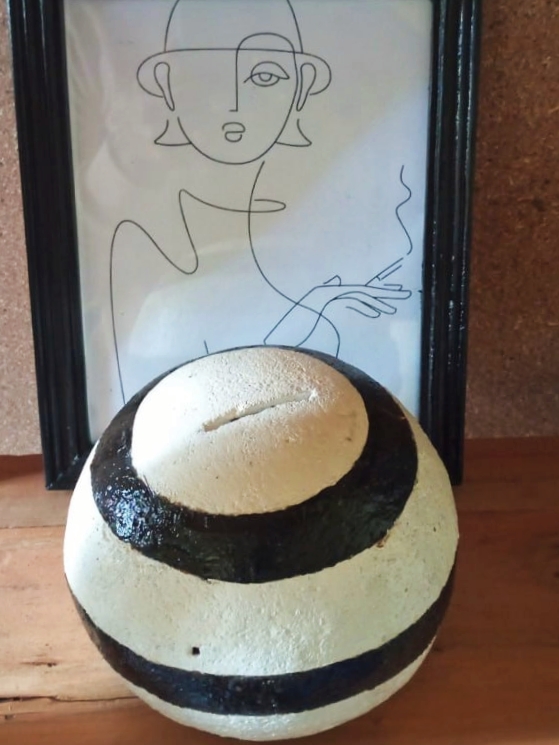
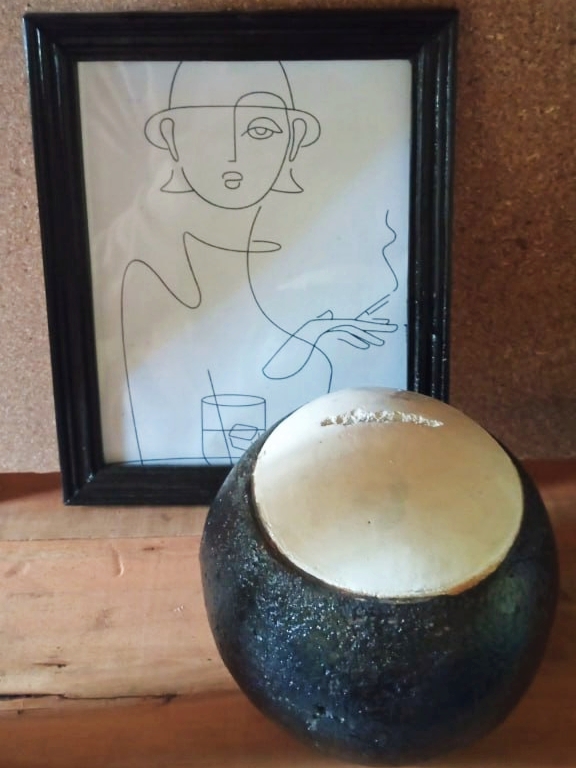
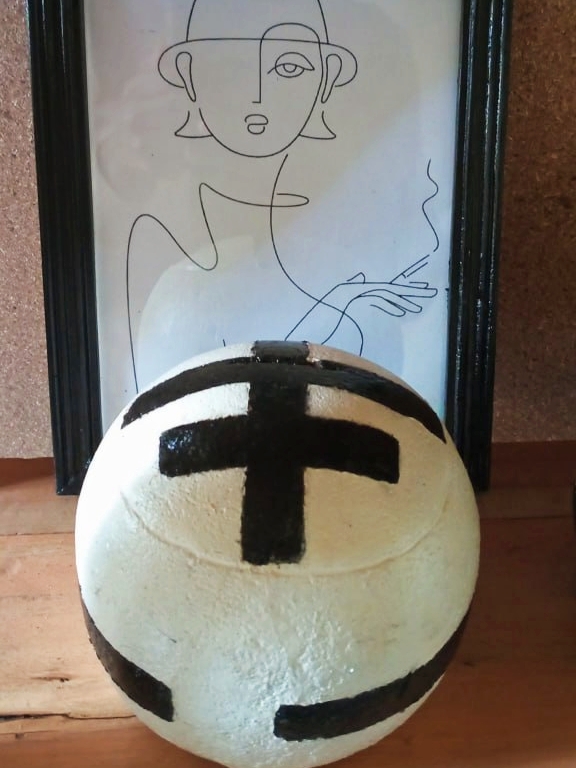
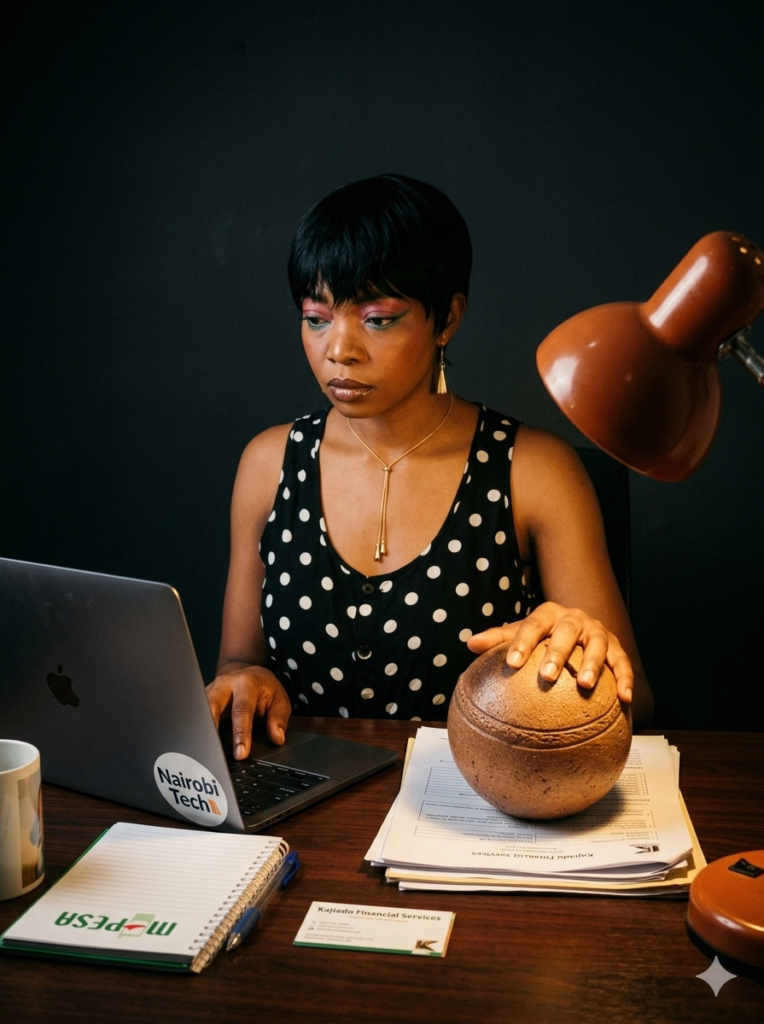
The YVI Pot of Dreams is a handcrafted Kenyan terracotta savings pot — physically sealed, break-to-open, designed to make the act of putting money aside a deliberate ritual rather than a passive transaction. It is a YVI product, and yes, I sell it through YVI Shop.
I am disclosing that too.
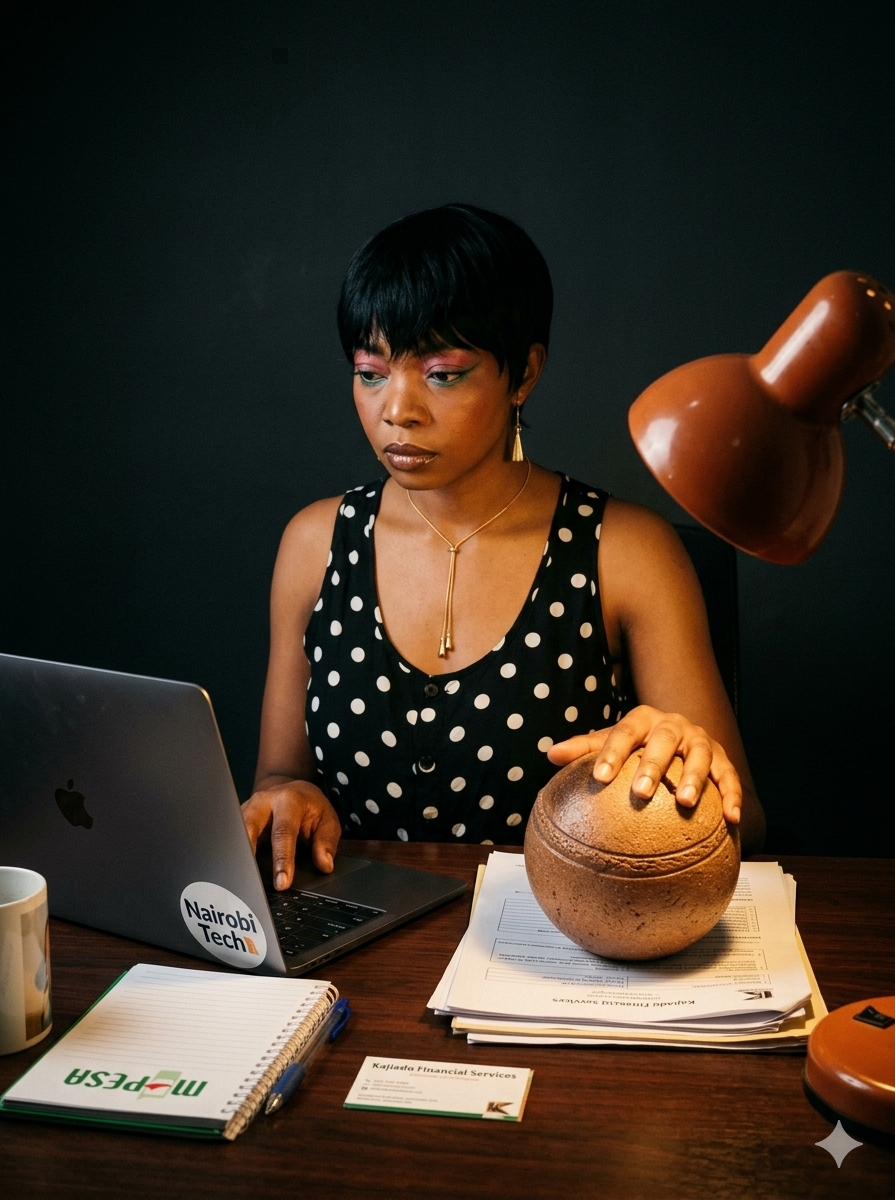
I have one on my desk.
Every time I earn from a referral, close a consultancy, or receive a freelance payment, a portion goes into the pot before it goes anywhere else.
It is not earning interest.
It is not tracked on a platform. It is not verifiable by anyone outside my home.
That is the point.
The crowdfunding fraud conversation is almost entirely about the failure of public trust — strangers deceiving strangers at scale. But there is a quieter failure that fraud culture produces that gets less attention:
it erodes your relationship with your own savings discipline.
When you are conditioned to be suspicious of collective financial instruments, you become reluctant to put money anywhere that feels uncertain — including the informal, private, personal savings practices that actually work for most Kenyan households.
The Pot exists as a counterweight to that erosion.
It is not a fintech solution.
It is a physical commitment device — an object that makes the intention to save legible to yourself.
You cannot check the balance without breaking it. You cannot make a quick withdrawal because you convinced yourself you needed something.
The friction is the feature.
The two instruments are not competing.
They are complementary and they operate at different scales of accountability:
The OneKitty kitty is accountable to my audience — public, documented, relational, externally verifiable.
The Pot is accountable only to me — private, physical, intentional, self-governed.
A complete personal finance architecture for someone in my position — founder, freelancer, postgraduate student, editorial publisher — needs both layers.
The public layer that draws on community trust and shared investment in a narrative. And the private layer that holds the savings discipline that no platform, no fraud, and no market fluctuation can touch.
When the pot eventually breaks open, whatever is inside goes toward the tuition too.
It just arrives differently — without a contribution notification, without a platform fee, without anyone having been asked for anything.
That is also funding.
It is just the quieter kind.
The broader argument
Kenya’s crowdfunding ecosystem is at an inflection point. The fraud problem is real enough that it is beginning to suppress legitimate fundraising — not just among suspicious strangers, but within communities that should be the most natural infrastructure for mutual support.
The response cannot only be platform-level. Platforms can improve verification, tighten withdrawal controls, and build better reporting mechanisms.
But the deeper problem is a trust deficit that technology alone cannot restore.
What restores trust is evidence.
Accumulated, verifiable, public evidence of who people are, what they have built, and whether their record matches their claims.
That is the work that editorial publishing does — slowly, post by post, disclosure by disclosure — in a media environment that mostly runs the other direction.
The choice between a public campaign and a private kitty is, at its core, a choice about what kind of evidence you are offering the people you are asking for help.
Public platforms offer reach — they are built to find strangers who care. OneKitty offers relationship — it is built for the people who already do.
In a fraud-saturated market, relationship is the scarcer resource. That is why I chose the private model. And it is why, if this series succeeds, the contributors who came in early — before the credential, before the research, before the proof was complete — will have participated in something more interesting than a tuition fund.
They will have participated in the restoration of trust, one documented transaction at a time.
Victoria Ivykaye Musebe is the founder of Atoto & Atori, operating Nnalolile For Business (B2B editorial) and YVI (private blog). She has over seven years of marketing experience across education, agencies, corporates, NGOs, and faith organisations.
NNALOLILE FAQS about ONEKITTY
Yes.
OneKitty is operated by Liana Technologies Limited, a Kenyan company registered with the Office of the Data Protection Commissioner as a Data Processor (Serial No. 10879, valid April 2025–2027).
Money custody is handled through SasaPay, a payment services provider licensed by the Central Bank of Kenya under the National Payment System Act 2011.
OneKitty charges 2% for Chama kitties, 2.5% for contribution kitties, and 5% for event kitties.
Setting up a kitty is free.
Normal M-Pesa and network tariffs apply on withdrawals and contributions.
The minimum withdrawal amount is KES 250.
M-Changa is a public fundraising platform designed for broad campaigns with wide social reach — harambees, medical funds, and large organisational drives. OneKitty is a private, group-based platform designed for Chamas, closed contribution circles, and event kitties among people who already know each other. M-Changa is built for discovery by strangers. OneKitty is built for accountability within known groups.
Chamasoft is a full Chama management suite — member registers, loans, dividends, financial reporting. OneKitty is a simpler contribution-and-withdrawal tool without loan management or accounting features. OneKitty suits informal savings groups needing a basic digital layer. Chamasoft suits investment-oriented Chamas needing institutional-grade governance.
Up to three treasurers per kitty, all of whom must approve withdrawals. This mirrors how real Chamas operate and prevents unilateral access to funds.
No.
OneKitty allows only one active fundraiser per MSISDN (SIM card) at any given time. You can contribute to unlimited fundraisers created by others, but you can only manage one active kitty yourself.
A: Yes. Platforms like OneKitty allow you to create a private contribution kitty that friends, colleagues, and professional contacts can contribute to via M-Pesa.
It is not a loan and does not require repayment. It works best when the fundraiser has a documented, verifiable cause and an existing relationship with their contributors.
The imagination economy is an emerging economic framework in which value is created not by attention (attention economy) or curated experiences (experience economy), but by the ability to articulate a credible, specific vision of a future that does not yet exist — and to attract investment, collaboration, or support on the basis of that vision.
It is particularly relevant to founders, creators, and independent professionals who fund their work through community belief before proof of outcome is available.
Blockchain introduced the concept of on-chain proof — transparent, timestamped, independently verifiable records of actions and agreements. In the context of personal fundraising, this logic can be applied without literal blockchain: by building a documented public record of your work, disclosures, and commitments, you create the equivalent of a verifiable proof of seriousness that reduces the information asymmetry between you and potential contributors.
A: OneKitty charges 2.5% on contribution kitties. Setting up the kitty is free. Contributors pay via M-Pesa at normal network tariff rates.
Yes.
While comprehensive public data is limited, documented patterns include fraudulent medical emergency campaigns, fabricated burial fundraisers, and increasingly, education fraud — fake school fee campaigns, fabricated scholarship gaps, and falsified university admission documents shared on WhatsApp. The cumulative effect is a widespread hesitation to contribute to public campaigns, even legitimate ones.
Public crowdfunding (campaigns visible to anyone) is optimised for reach — strangers can discover and contribute to your cause. Private crowdfunding, like OneKitty’s invitation-only kitty model, is optimised for relationship — only people you invite can contribute. Public platforms carry higher fraud risk because contributors cannot easily verify the organiser. Private platforms rely on pre-existing trust, which is harder to fake.
OneKitty is suited for individuals fundraising within a known community — Chama members, professional networks, close contacts. It is governance-gated (up to three treasurers approve withdrawals), invitation-only, and built for recurring or goal-based contributions rather than emergency viral campaigns. For someone with an established public profile and a documented cause, it offers accountability that a public campaign cannot replicate.
The YVI Pot of Dreams is a handcrafted Kenyan terracotta savings pot — physically sealed and break-to-open — designed as a personal savings discipline tool. In a tuition-funding strategy, it operates as the private, self-accountable layer alongside a community kitty: the kitty draws on relational support from your network, while the Pot accumulates personal savings without platform fees, withdrawal temptations, or external accountability. Together they form a two-instrument savings architecture for self-directed professionals.
Yes, though education fundraising carries a cultural hesitation that medical and funeral campaigns do not — Kenya’s collective-finance instinct has historically activated for crisis rather than aspiration. This is changing, particularly among professionals using documented, transparent fundraising approaches that allow contributors to verify the organiser’s identity, cause, and commitment before contributing.
Contribute to the tuition kitty
Like flowers that bloom in unexpected places, every story unfolds with beauty and resilience, revealing hidden wonders.
Leave a Reply