

← First read: That Stack of Old Paper in Your Office? That’s Cash.
49 people are dead. 2,624 families have been displaced. Eric Omondi is heading to Uhuru Park with a broom this Saturday. And in the same city, on the same morning, Peter Mayeku Waste Paper Limited opens a tissue processing company.
None of this is a coincidence.
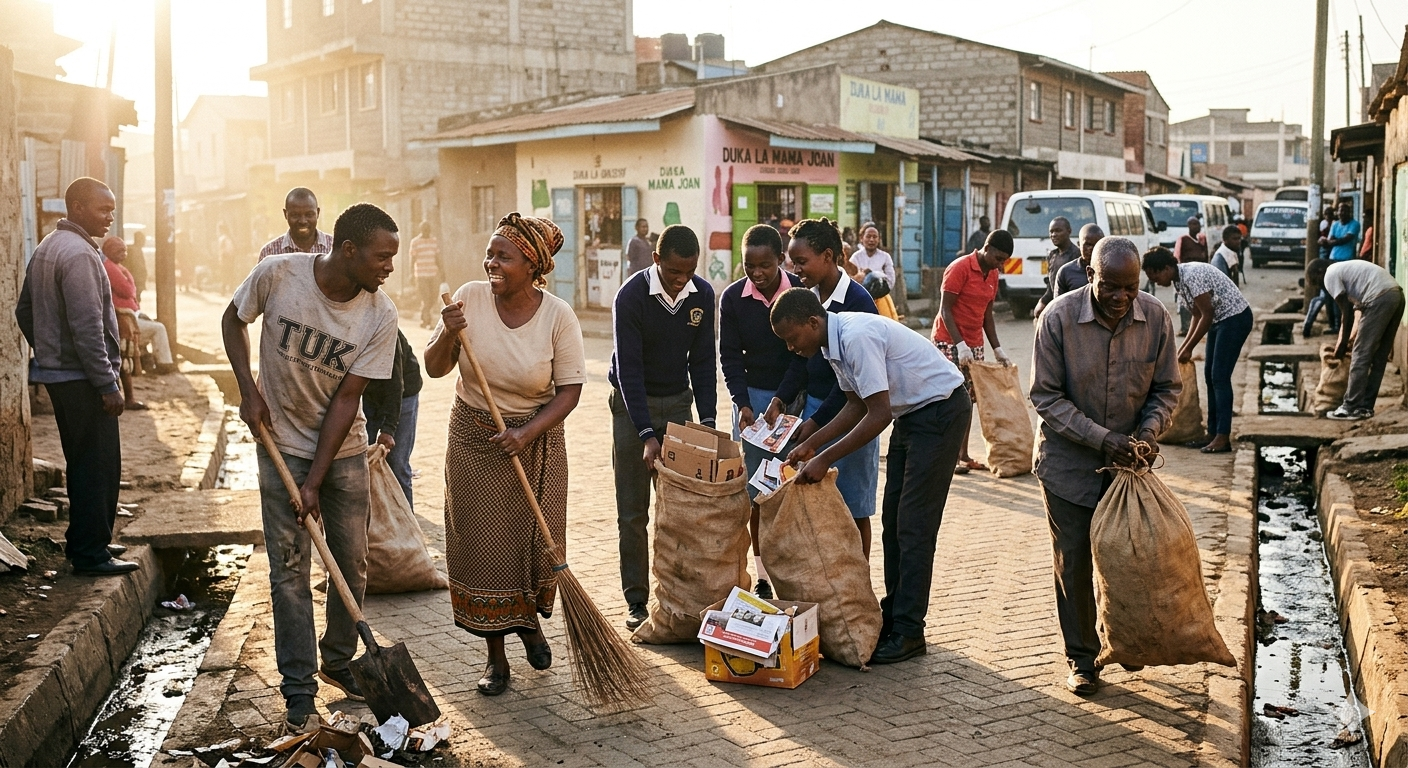
What Eric Omondi is rallying Nairobi around this weekend is bigger than one man with a broom. It is the Sisi Kwa Sisi spirit at full force — ordinary Nairobians deciding, without waiting for a government memo, that their city is theirs to fix.
We love that.
The energy is exactly right.
The intention is exactly what this city needs.
But a cleanup, without a system behind it, is a one-time event. Nairobi will generate more waste next week.
And the week after.
The drains will fill again.
The same paper, the same cardboard, the same flood.
That is where Peter Mayeku Waste paper comes in.
49
Deaths from the
March 2026 floods
2,624+
Families displaced
overnight
3,000 T
Waste Nairobi
generates daily
30–40%
Of it actually
gets collected
The Flood Was an Audit
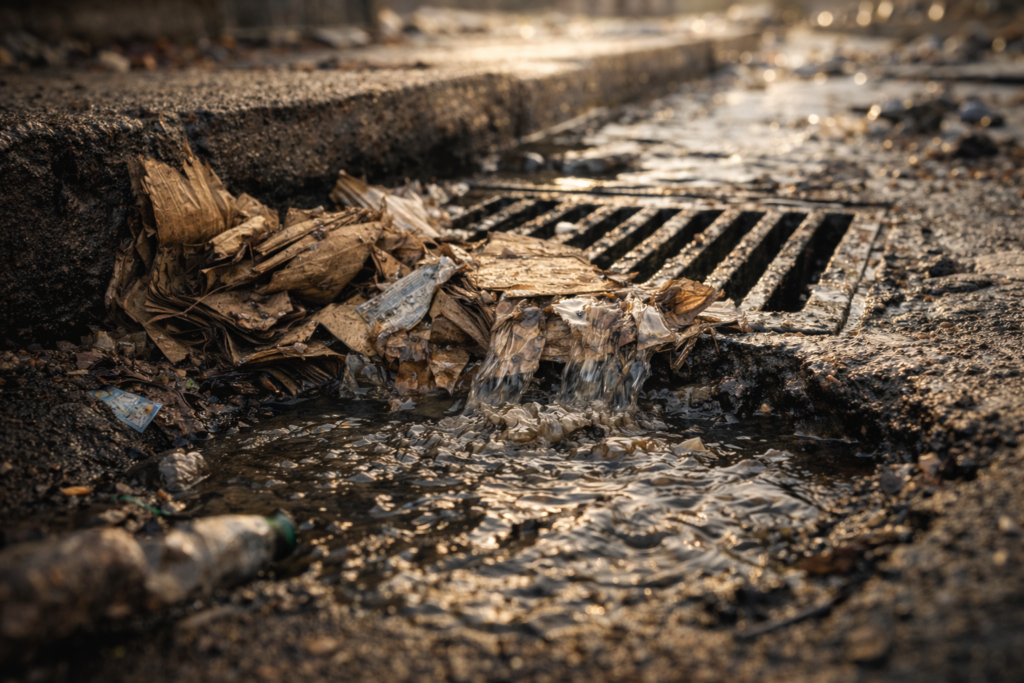
Nairobi’s March 2026 floods were not purely a rainfall event. Blocked drainage channels, carrying years of uncollected waste — paper, cardboard, packaging, the things that had buyers if anyone had connected them — turned road after road into fast-moving rivers across Mukuru, Kibra, Mathare, Huruma, and Westlands. The water found the gaps we left.
Paper and cardboard are the silent contributors that rarely get named. Plastic takes all the blame — and plastic is a problem — but paper absorbs water, swells, and mats together in drainage channels with the structural integrity of a dam.
The March floods carried visible paper cargo down the Nairobi River: cardboard from market stalls, newspaper wadding, printing offcuts from River Road print shops.
All of it had a buyer.
None of it found one.
The problem is not that Nairobi has too much paper. The problem is that no one has built a permanent home for it.— Nnalolile For Business
This Saturday: Two Kenyans, One Mission
Eric Omondi walked the flood hotspots himself this week. His conclusion was the same one water engineers have been saying for years: drainage and garbage.
His response — mobilising Nairobians under the #FagiaNairobi banner at Uhuru Park, Saturday 8 a.m. — is the Sisi Kwa Sisi spirit converting itself into action.
Show up.
Clean the city.
Do not wait for anyone.
We are fully behind it.
But we want to ask the harder question: when the cleanup ends on Saturday afternoon and volunteers go home tired and proud, where does the paper go?
Into another skip?
Down another drain when the next rain comes?
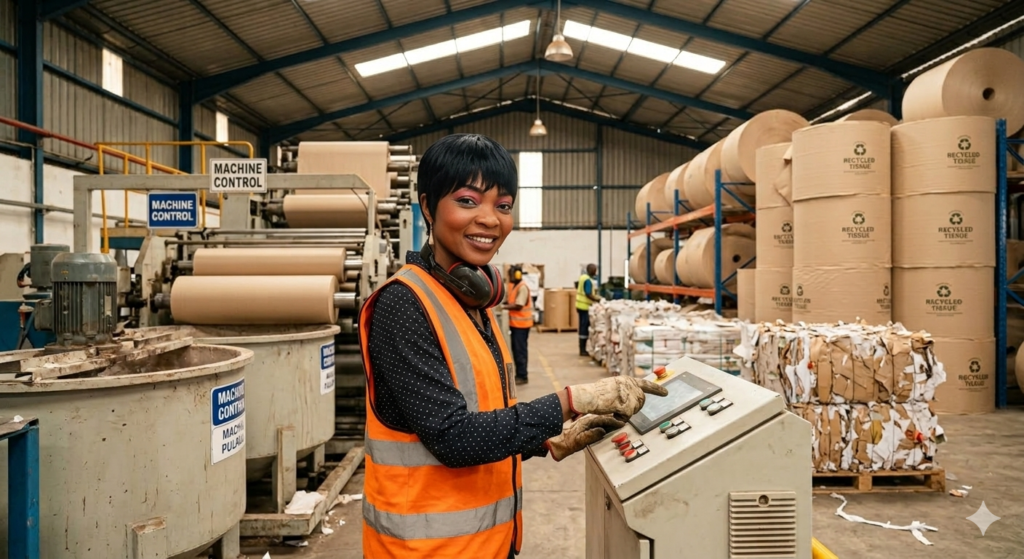
On the same Saturday morning, a few kilometres away, Peter Mayeku Waste Paper Limited is opening the doors of a tissue processing facility. The paper that filled those blocked channels — exercise books, cardboard, old reports, packaging — goes in. Tissue comes out. A product Nairobi uses every single day, made from the waste that has been killing its people.
✦Why This Opening Matters Right Now
Nairobi’s flood crisis has a simple diagnosis: too much uncollected waste, too little infrastructure to process it. Peter Mayeku’s tissue processing facility is a working, permanent answer to that diagnosis — not a campaign, not a cleanup drive, not a tweet. A building. A machine. A product.
The broom and the processing machine are not in competition. They are in sequence.
Sisi Kwa Sisi Is Infrastructure Too
The Sisi Kwa Sisi spirit that Eric Omondi is channelling this weekend is real and it is important. Citizens deciding that the city is theirs to maintain — not out of obligation, but out of love for where they live — is a form of governance that no county budget can manufacture. We see it. We appreciate it deeply.
But Sisi Kwa Sisi is also infrastructure. A tissue processing facility built by a Kenyan entrepreneur, buying waste paper from Kenyan households and businesses, employing Kenyan workers, and producing tissue for the Kenyan market — that is not charity. That is a permanent economic structure where the community’s waste funds the community’s employment.
We reviewed Peter Mayeku Waste Paper Limited earlier this year and called them one of the most legitimate, professional paper buyers operating in Nairobi today.
The tissue processing company is the natural next step — and it is exactly what this moment calls for.
A Direct Note to Nairobi’s Businesses and Institutions
The volunteers cleaning the streets this Saturday are spending their own time, their own energy, and their own Saturday morning to fix a problem that corporate Nairobi largely created and largely ignores. The paper your office, hospital, school, or warehouse sends to an unregistered collector — or worse, to a skip — is the paper that ends up in those drains.
📋For Compliance Officers & Procurement Terms
Under Kenya’s EPR Regulations 2024, your organisation is legally required to demonstrate responsible end-of-life management for paper products. Every unlicensed skip your paper goes into is a compliance exposure. NEMA has authority to inspect and demand evidence.
Peter Mayeku Waste Paper Limited provides NEMA-registered collection, Certificates of Destruction, and ESG disposal receipts — the full compliance package. Free collection for volumes above 50kg, anywhere in Nairobi.
The cleanup volunteers shouldn’t have to do your company’s waste management. Schedule a collection.
Not sure if your paper qualifies?
If it is mostly fibre and you can tear it, Peter Mayeku Waste Paper Limited will almost certainly buy it. Call ahead to confirm the current rate for your paper type:
+254 70 118 2394.
After Saturday, Then What?
Nairobi has a habit of rallying after a disaster and returning to normal before the next one. We have seen it with the Westgate aftermath, with Gen Z’s June 2024 protests, with every flood season that comes and goes without structural change.
The energy peaks.
Then it disperses.
Peter Mayeku’s tissue processing company does not disperse. It opens on Saturday and it operates on Sunday. And Monday. The machine does not need a hashtag to keep running. That is the difference between a moment and a movement — and it is the difference between a cleanup and a solution.
Sisi Kwa Sisi means we build the thing ourselves. Eric Omondi is building the cleanup. Peter Mayeku is building the system that makes the cleanup last.
Support both.
GET IN TOUCH
- Free collection for 50kg+ anywhere in Nairobi.
- Cash on delivery.
- NEMA-compliant.
- ESG receipts available for corporates.
Leave a Reply