
Nnalolile’s honest, no-fluff review of Nairobi’s waste paper buyers — the prices, the compliance, the corporate game, and why your Finance team should care.
Let me paint you a picture. You’re a mid-level manager at a Nairobi corporate. Your storage room has three years of printed reports, filing cabinets stuffed with contracts that expired during the pandemic, a mountain of old A4 drafts, and boxes of textbooks from a training programme nobody even remembers. Every quarter, the office manager asks what to do with it. Every quarter, it gets shuffled to a corner.
Here’s what nobody has told you yet: that mountain is money. And if your company handles it wrong, it’s also a compliance liability.
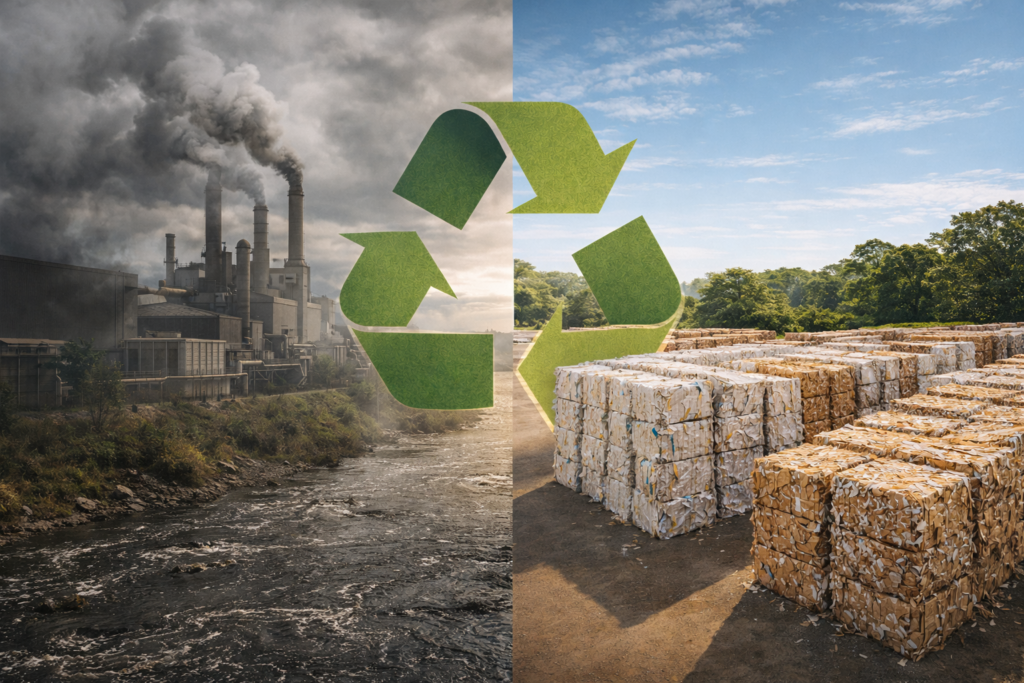
I grew up in Webuye, Bungoma County — just down the road from Pan African Paper Mills, a giant of Kenyan industry that eventually became a cautionary tale. The plant’s chimneys were so aggressive that iron sheets in the town would literally rust from the fumes.
Studies found over 60% of children born in Webuye after 1974 had respiratory problems. The Nzoia River ran grey. Kakamega Forest was being stripped bare. Pan Paper wasn’t just a factory — it was a lesson in what happens when we treat paper like a throwaway resource with no downstream consequences.
Then Pan Paper collapsed. And — slowly — the air cleared. And our community started asking:
What if recycling the paper we already have is the smarter play?
That question is what sent me looking for waste paper buyers worth recommending. And that’s how I found Peter Mayeku Waste Paper Limited.
“We watched Panpaper pollute our town for decades — the sludge, the smoke, the sick children. When it shut down, our health improved almost immediately. But Kenya still needs paper. The question is not whether to produce it, but how. Recycling old paper is the answer — no new trees felled, no toxic effluent in our rivers, no stench choking our children.”
Peter Mayeku
Today, as Panpaper’s former workers await Sh230M in terminal dues through Rai Paper — a painful legacy of decades of poor management and environmental negligence — Peter Mayeku chooses a different path.
A circular path.
A profitable, healthy, sustainable path that Nairobi’s households, schools, offices, and institutions can all join.
Our Verdict. Let’s Not Bury the Lead.
You’re busy. You have a standup in 20 minutes and a budget review at 3pm. Here it is straight:

✅ Recommended — Especially for Corporate & Institutional Sellers
Peter Mayeku Waste Paper Limited is legitimate, professional, and pays fairly. Transparent weighing, cash on delivery, and a service range that goes well beyond what most Nairobi waste paper buyers offer. If you’re a company, school, hospital, or NGO with paper to dispose of compliantly — these are the people to call. Read on for the full picture.
★★★★½
NNALOLILE REVIEWS
Peter Mayeku Waste Paper Limited
✅ The Wins
- Transparent weighing — scale is visible, no surprises
- Cash on delivery, zero waiting
- Wide paper type acceptance — no unnecessary rejections
- Collection from your premises (50kg+ volumes)
- Certificate of Destruction available for corporates
- NEMA-compliant operations
- Proper receipts — useful for ESG reporting
- Friendly team that actually explains price breakdowns

→ Things to Know First
- Best rates go to sorted, clean paper — mixed loads pay less
- Free collection kicks in above 50kg
- Prices shift with market — always call ahead to confirm
- Peak periods can slow turnaround — schedule early
The Part Your Compliance Officer Actually Cares About 📋
Let’s talk about something most waste paper blogs completely skip: corporate compliance.
If you’re in procurement, legal, or finance at a Kenyan organisation, disposing of paper isn’t just an office housekeeping task. It’s a legal obligation — and getting it wrong can cost you a tender, a regulatory fine, or a data breach headline.
The Kenya National Examinations Council (KNEC) regularly tenders for waste paper disposal services — and their requirements reveal the minimum standard that serious organisations apply. Key requirements for any compliant waste paper disposal partner typically include: NEMA registration (mandatory), a documented chain of custody from collection to recycling, Certificate of Destruction on request, compliance with the Public Procurement and Asset Disposal Act 2015, and anti-corruption declarations from the service provider. Peter Mayeku Waste Paper Limited meets this compliance profile — making them tender-ready for institutions like KNEC, universities, hospitals, and county governments.
Here’s something that catches many corporate teams off guard: under Kenya’s Data Protection Act 2019, printed documents containing personal information — HR records, client files, medical records, financial statements — are subject to the same data protection obligations as digital files. Improper disposal (chucking them in a skip, giving them to an unregistered collector) is a compliance failure that the Office of the Data Protection Commissioner can and does investigate.
Peter Mayeku Waste Paper Limited’s certified destruction service means your data dies with the paper. Certificate issued. Audit trail complete. Your DPO can sleep at night.
The Environmental Management (Extended Producer Responsibility) Regulations, 2024 — gazetted November 4, 2024 — formally require companies that produce or import paper products to take responsibility for their end-of-life management. Under Section 13 of the Sustainable Waste Management Act 2022, producers must demonstrate how their products and packaging are managed to end of life. NEMA has authority to inspect facilities and demand this evidence.

What does this mean for your company?
If you produce or import paper products, you need a NEMA-registered waste collection partner in your supply chain — and you need to document it. Peter Mayeku Waste Paper Limited sits precisely in that role for corporate clients.
⚠️Quick checklist for procurement teams:
When appointing a waste paper disposal partner, confirm they have
- current NEMA registration,
- Certificate of Destruction capability,
- documented chain of custody, and
- ability to provide ESG/sustainability disposal receipts for your annual report.
Peter Mayeku Waste Paper Limited ticks all four.
Every Question You Googled — Answered Honestly 🔍
These are the actual search queries people type before visiting a waste paper buyer. Here are real answers for Nairobi, 2025.
In Nairobi, waste paper prices typically range from Ksh 3 to Ksh 12 per kilogram, depending on the type and quality.
White office paper fetches the highest rates (Ksh 8–12/kg), followed by cardboard/cartons (Ksh 5–8/kg), and newspapers/magazines (Ksh 3–6/kg).
Peter Mayeku Waste Paper Limited operates within this standard market range — call ahead to confirm the current rate for your paper type.
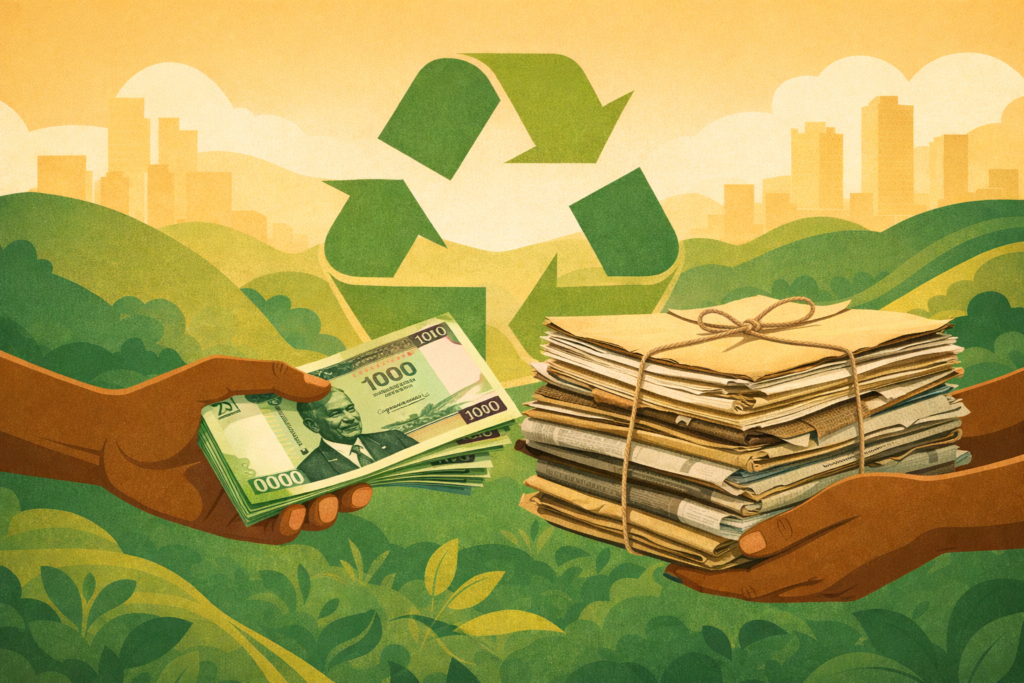
Yes, absolutely. From my personal experience, Peter Mayeku Waste Paper Limited pays cash on delivery — no waiting, no promises, no follow-up required. Schools, hospitals, corporates, and households across Nairobi are already earning regularly from paper they previously threw away. This is a real income stream, not a gimmick.
Yes. Old textbooks, exercise books, exam papers, novels, encyclopaedias, even old receipts and printed reports all qualify. Peter Mayeku Waste Paper Limited buys old paper by weight. You don’t need to sort it perfectly — though sorting does get you better rates. The more you have, the better the rate you can negotiate.
Kenya has a growing and active recycled paper market. Companies like Chandaria Industries recycle up to 4,000 tonnes per month, employing over 20,000 Kenyans. When you sell your waste paper to Peter Mayeku Waste Paper Limited, it feeds directly into this thriving circular economy. You’re not just decluttering — you’re participating in something meaningful.
The market is large and growing. Recycled paper is used to make tissue, toilet paper, newsprint, packaging board, egg trays, envelopes, and printing paper. The Ellen MacArthur Foundation projects Kenya’s circular economy could generate $3.4 billion per year by 2030. Paper recycling is one of its most established and profitable sub-sectors — Peter Mayeku Waste Paper Limited sits right at the heart of this growing market.
Paper and cardboard recycling ranks among the most profitable and lowest-barrier recyclable categories in Kenya. Unlike e-waste (which requires specialist equipment) or plastic (complex sorting), paper is easy to collect, transport, and resell. White office paper fetches the highest per-kg rates of any common recyclable — and a business like Peter Mayeku is set up to make the most of that.
Currency paper is made from a special blend of 75–80% cotton and 20–25% linen fibres — not typical wood pulp. It is not collected through regular waste paper channels. However, the principle behind paper recycling — turning used fibre into new products — is the same philosophy that makes the work of Peter Mayeku Waste Paper Limited so economically vital for Kenya.
12 Types of Paper Peter Mayeku Waste Paper Limited Buys
One of the things I appreciated about my visit was how broad their buying criteria are. You don’t need to show up with pristine white A4.
Here are 12 types of paper they actively buy, all of which are fully recyclable into new products
Primary and secondary school exercise books — with or without writing. One of the most common and easy-to-accumulate categories.
Old KCSE textbooks, university course books, encyclopaedias, dictionaries — all bought by weight, condition less critical.
Used A4 or A3 office prints, drafts, reports, photocopied documents — one of the highest-value waste paper grades.
Old copies of Nation, Standard, Star, and other dailies are collected in bulk and recycled into new newsprint and tissue.
Glossy or matte magazines, company catalogues, and brochures — recycled into packaging board and tissue products.
Corrugated boxes, brown cartons from supermarkets and warehouses — a high-volume, steady-demand grade.
Used envelopes (with or without windows), paper mailers, and padded document bags are all recyclable.
Already shredded confidential documents are perfectly recyclable. Peter Mayeku Waste Paper Limited can advise on secure disposal options too.
Old financial records, archived invoices, till receipts (non-thermal), and accounting printouts — collected in bulk from businesses.
Old perforated printer paper, dot-matrix prints, and computer listing paper — still in high demand from recyclers.
Off-cuts and rejects from print shops, publishing houses, and packaging companies — often available in large, clean quantities.
Used notebooks, expired planners, agendas, and scribbled notepads — small items that add up fast by weight.
Not sure if your paper qualifies?
As a general rule: if it’s made mostly of fibre and you can tear it, Peter Mayeku Waste Paper Limited will likely buy it. Contact them and they’ll confirm quickly.

“I showed up with roughly 35kg of mixed paper — old exercise books from my kids’ school years, a box of printed reports from an old job, and a few months of accumulated newspapers. The team at Peter Mayeku Waste Paper Limited weighed everything clearly in front of me, explained the rates by category, and paid me cash before I left. No drama, no haggling games. That is exactly what you want from a buyer.”
“What impressed me most was the transparency. Some collectors you visit will give you a suspiciously round number for the weight. Here, the scale was visible, and they sorted through my paper and explained why certain types paid more than others. You leave feeling like you understood the transaction.
That matters.”
What Peter Mayeku Waste Paper Limited Offers Beyond Simple Buying
Beyond Buying: Their Full Service Menu for Corporates 🏢
This is not a guy with a handcart. Peter Mayeku Waste Paper Limited is a full-service paper lifecycle partner.
Here’s what that means in practice:
🔒Confidential Document Destruction
Certified destruction of HR records, client files, financial statements, legal contracts, medical records — compliant with Kenya’s Data Protection Act 2019. Certificate of Destruction available. Your data doesn’t leave in a truck and resurface somewhere embarrassing.
⚖️ Legal Paperwork Archive Decommissioning
Law firms, county registries, and corporate secretaries accumulate years of archived paperwork. We help you legally retire old case files, title documents, and redundant legal correspondence — with a clear chain of custody at every step. Tender-compliant. Audit-ready.
🏥 Hospital & Medical Records Disposal
Healthcare facilities generate enormous volumes of paper — patient registrations, prescriptions, insurance claims. Medical paper waste is handled with full confidentiality protection throughout collection and recycling. No patient data compromised.
📅 Scheduled Corporate Collection
Set up a recurring collection schedule — monthly, quarterly, annually. You run your business, Peter Mayeku manages your paper waste stream. ESG documentation and receipts issued for every collection. Useful for sustainability reports and board presentations.
🚚 Free Collection from Your Premises
For volumes above 50kg, they come to you — anywhere in Nairobi. Weighed on-site, paid on-site. Zero transport logistics on your end. Zero waiting for a bank transfer.
“I spoke with the team about their corporate services and was genuinely impressed. They clearly understand that for an office or a hospital, throwing paper into any skip is not an option. The fact that they offer documented chain-of-custody disposal puts them in a completely different league from the average waste paper buyer on Nairobi’s streets.”
— Nnalolile’s Anonymous Review
The Creative Upside — What Young Kenyans Are Doing With Recycled Paper 🎨
Not everything here is compliance and regulation. Kenya’s Gen Z and millennial entrepreneurs are quietly building entire businesses on the back of recycled paper — and the movement is growing fast. If you’re not selling your paper to a buyer, the next best move is upcycling it yourself:
Rolled magazine strips transformed into colourful bead necklaces and earrings — sold at Maasai Market and on TikTok shops.
Handmade paper embedded with herb and flower seeds — a gift card the recipient can plant. Popular for weddings and eco-brands.
Old newspaper and exercise books pulped into bowls, sculptures, and lampshades — sold through Nairobi interior boutiques.
Recycled-paper shopping bags for boutiques and restaurants replacing banned single-use plastics — a booming micro-enterprise.
Upcycled paper bound into beautiful eco-journals — popular among Nairobi’s journaling community. Many Kenyan Etsy sellers ship these globally.
Strips of old newspaper woven into trays, baskets, and wall hangings — fusing traditional weaving styles with sustainable materials.
Companies like Cots Paper and Board (Kenya) manufacture egg trays entirely from 100% recycled waste paper, feeding local poultry supply chains.
Young Kenyan entrepreneurs making honeycomb paper padding and paper packaging — selling directly to e-commerce brands replacing Styrofoam.
These boards overflow with brilliant waste paper craft ideas — bookmark them, share with your students, or use them to start your own upcycling side hustle:
The point: paper doesn’t have one life. It has many. Whether it goes to Peter Mayeku Waste Paper Limited to be recycled into new board, or to a Westlands art studio to become a lampshade — the linear throwaway model is finished. Kenya’s young people know this already.
Why the Law Is Working in Your Favour Right Now ⚖️
Recycling your office paper is no longer just a nice thing to do for the environment. It’s becoming a legal and commercial necessity. Here’s the policy landscape shaping the market:
Kenya’s Sustainable Waste Management Act 2022 formally shifted the country from a linear “take-make-dispose” economy to a circular one. The Extended Producer Responsibility (EPR) Regulations, gazetted November 2024, now require producers and importers of paper products to manage their waste responsibly and register with NEMA. These regulations explicitly list paper and cartons among EPR-covered products. Every company that produces paper is now legally required to ensure it has a proper end-of-life disposal plan — and a NEMA-registered partner like Peter Mayeku Waste Paper Limited is how you demonstrate compliance.
Kenya’s Ministry of Health has long grappled with the health consequences of poor waste management. Unmanaged waste — including paper — clogs drainage systems, creates breeding grounds for disease vectors, and contributes to the air quality crises seen in cities like Nairobi. The ministry’s mandate for a clean and healthy environment (enshrined in Article 42 of the Constitution) makes responsible paper disposal not just good business practice but a constitutional obligation for all Kenyans. When Nnalolile collects and recycles your paper, we are directly serving the Ministry of Health’s vision of a healthier Kenya — one fewer dump, one cleaner drainage channel, one fewer child with a respiratory complaint.
This is a lesson we learned early in Webuye. Pan African Paper Mills — whose operations the World Rainforest Movement documented as causing chronic coughing, breathing problems, typhoid, and nervous disorders in over 60% of children in the area — demonstrated with devastating clarity what happens when paper production is done without environmental conscience. The stench alone caused iron sheets in Webuye town to rust.
The river ran grey into Lake Victoria. Deforestation of Kakamega Forest accelerated as the mills stripped vast areas of wood cover to feed their furnaces. The lesson: how we handle paper matters enormously to public health.
President William Ruto’s administration has placed the circular economy and green jobs at the centre of Kenya’s economic recovery strategy. Under Vision 2030 and the Bottom-Up Economic Transformation Agenda (BETA), waste management and recycling have been identified as priority sectors for creating green employment, particularly for youth and women.
- $3.4B: Projected annual benefit to Kenya from circular economy by 2030 (Ellen MacArthur Foundation)
- 4,000T: Paper waste recycled per month by Chandaria Industries alone in Kenya
- 20,000+ Kenyans employed in Chandaria’s paper recycling operations
- 22,000T: Total waste generated daily in Kenya (UNEP / NEMA), much of which includes paper
Kenya’s plastic bag ban has also redirected packaging demand toward paper-based alternatives, boosting demand for recycled paper pulp. NEMA’s waste diversion targets — 30% recycling, 60% composting, less than 5% to landfill — mean the regulatory and commercial environment for paper recycling is only getting stronger. Selling your waste paper is going to become more lucrative, not less, as this regulatory environment matures.
Kenya’s National Environment Management Authority (NEMA) — under the Sustainable Waste Management Act — has set targets for waste diversion: 30% of waste to be recycled, 60% composted, with less than 5% going to landfill. For this target to be met, paper recycling at the household and institutional level must accelerate dramatically. Every kilogram of paper you sell to Nnalolile is a vote for this vision.
Furthermore, the government’s EPR Regulations 2024 mean that companies that manufacture paper products are now required by law to invest in collection and recycling infrastructure — which directly increases demand for waste paper collection services and the prices paid per kilogram. As this regulatory environment matures, selling your waste paper is only going to become more lucrative, not less.
Kenya’s ban on single-use plastics — one of the strictest in Africa — has also redirected packaging demand toward paper-based alternatives, further boosting the market for recycled paper pulp. The economic fundamentals for paper recycling in Kenya have never been stronger.
Nnalolile Reviews: Paper Doesn’t Have to Die in a Dumpsite 🌱
Pan African Paper Mills’ collapse wasn’t just the end of a factory. It was the end of a way of thinking — that forests, rivers, and communities are inputs to be consumed, not partners in a sustainable system. The 230 million shillings in unpaid terminal dues that Panpaper workers are still fighting for decades later is the human cost of that kind of industrial thinking. Our children in Webuye breathed the cost too.
Peter Mayeku Waste Paper Limited is the other kind of thinking. When you bring them your waste — your old exercise books, your archived HR files, your school’s surplus textbooks — you’re voting for a circular economy over a linear dump. You’re choosing your compliance obligations seriously. And you’re making money while you do it.
In a country of 55 million people generating 22,000 tonnes of waste every single day, the Kenyan who figures out how to give value to discarded things will always have a future.
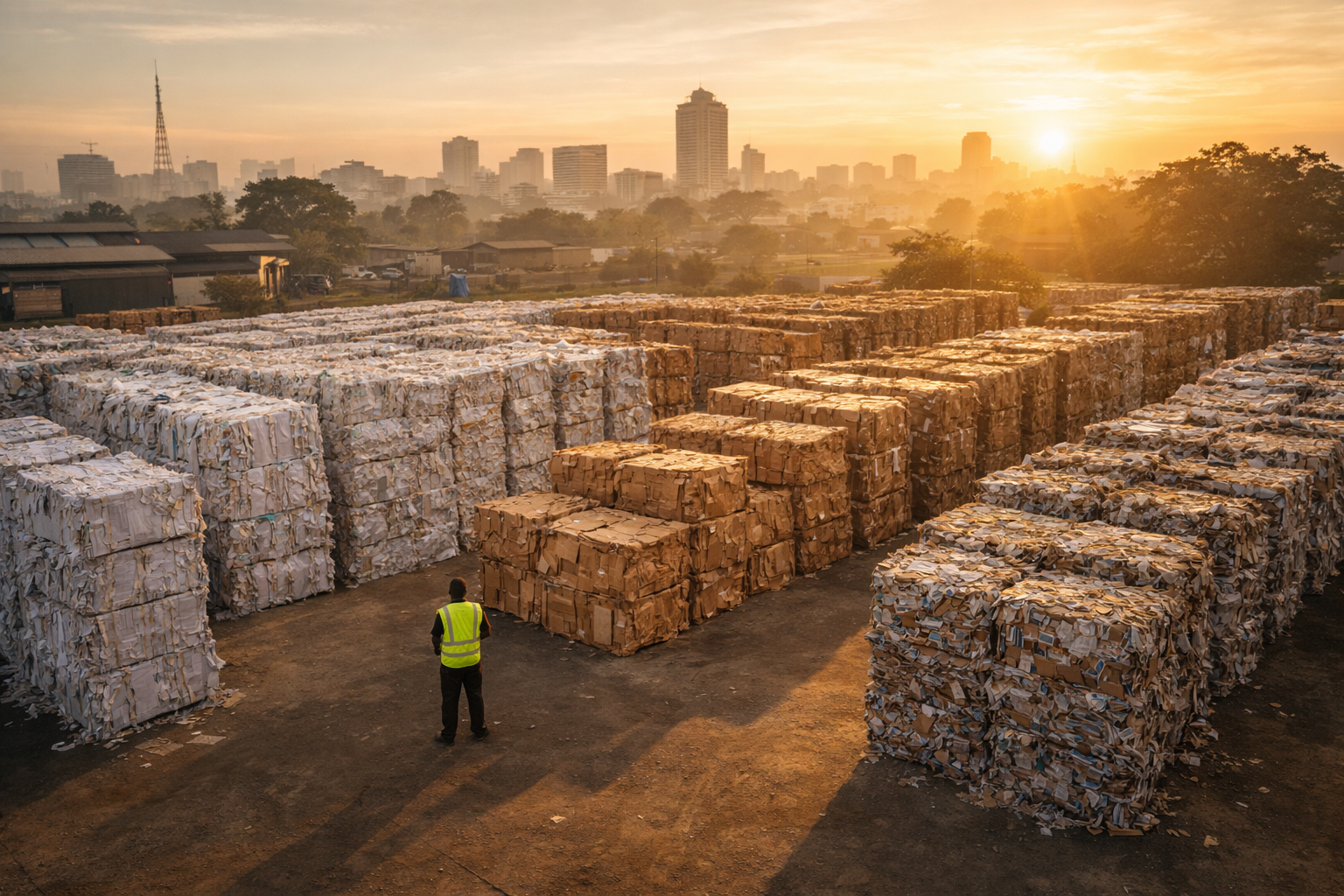
“I grew up near a mill that destroyed our environment. Every piece of waste paper that goes to a proper recycler like Peter Mayeku Waste Paper Limited is a small vote for a different kind of Kenya — one that gives value to what it would otherwise throw away.”
— Nnalolile | Nairobi Business Reviewer
- Cargo Handbook — Waste Paper: Description, Applications & Transport Standards
- KNEC — Tender for Provision of Waste Paper Disposal Services (2024)
- Kamongo Waste Paper — Kenya’s Leading Waste Paper Management Company
- Kenya Gazette Supplement No. 196 (4 Nov 2024): Environmental Management (Extended Producer Responsibility) Regulations 2024
- Clyde & Co (2025): The Extended Producer Responsibility Regulations 2024 — What it means for producers in Kenya
- KEPRO: Steps for NEMA Producer Registration under EPR Regulations 2024
- Standard Media (2026): Union faults Sh230m Pan Paper payout, claims workers sidelined
- World Rainforest Movement (2001): Kenya: Pollution and deforestation caused by Pan African Paper Mills
- Mulembe Online: The Rise and Fall of Pan-African Paper Industry in Webuye
- NEMA Kenya: Circular Economy in Kenya
- Ellen MacArthur Foundation: Circular Economy projections for Kenya 2030
- Frontiers in Sustainability (2023): Transitioning circular economy from policy to practice in Kenya
Leave a Reply