

Let’s address the metric nobody is flagging in the quarterly review.
The founder who hasn’t slept properly since January.
The midnight emails sent as a proxy for commitment.
The 4 a.m. deliverable dispatched to signal seriousness.
In Nairobi’s business corridors — Westlands, Upper Hill, Riverside, the WhatsApp decision-making channels — chronic exhaustion has been repackaged as competitive edge.
Here is what the data actually shows:
you are not operating at peak performance. You are running a high-stakes enterprise on a degraded system, and the cost is measurable.
The animal kingdom figured this out long before Silicon Valley got confused about it.

The Cat Model: Rest as Predator Strategy
A domestic cat sleeps 12 to 16 hours a day.
Nobody calls it lazy.
Nobody questions its commitment.
Because what the cat is doing is structurally obvious: it is a predator built for explosive, high-precision bursts of speed, strength, and focus.
Everything between those bursts is deliberate conservation. The cat is not idle. It is loading.
This is the model most founders have inverted.
Cats are crepuscular — peak performance at dawn and dusk, strategic rest in between. They are not available at all hours.
They are available at the right hours, fully charged, with reaction times that go from zero to decisive in under a second.
That is not a lifestyle.
That is an operating model.
The biological mechanics are worth understanding in business terms:
Energy Conservation Between High-Stakes Moments
Hunting — like pitching, negotiating, or making a critical hire — requires peak cognitive and physical output. Attempting it on a depleted system produces degraded results.
The cat does not chase prey at 40% capacity. It waits until conditions are optimal, then executes with precision. The downtime is not wasted time. It is the preparation that makes the execution possible.
Cellular Repair and System Maintenance
During sleep, the body performs repair work that cannot happen while the system is running — immune maintenance, tissue recovery, hormonal regulation.
For a founder, this is not a wellness detail. It is the maintenance schedule that keeps the primary business asset operational. Deferred maintenance compounds into structural failure.
Light Dozing vs. Deep Recovery
Not all cat sleep is the same. Much of it is light, partially alert dozing — responsive to environmental signals, ready to shift states instantly. A smaller portion is true deep sleep where the real recovery happens.
The lesson is not “be unconscious for 16 hours.” It is that both modes serve a function. Strategic rest does not mean being unreachable. It means knowing which mode you are in, and protecting the deep recovery cycles that everything else depends on.
High-Protein Processing
A cat’s high-protein diet is metabolically demanding. The body needs rest to process it efficiently.
A founder’s cognitive diet — complex decisions, competing priorities, high-stakes communication — is equally demanding. The brain needs offline time to process what it has consumed. Without it, the backlog accumulates and retrieval degrades.
The cat is not sleeping because it has nothing to do. It is sleeping because it has something important to do later, and it intends to do it properly.
The Business Case
$411B (US alone)
Annual economic loss to sleep deprivation
RAND, 2016
2.4×
Increased burnout risk under 6hrs sleep
WHO
40%
Cognitive performance drop after 17–19hrs awake
Sleep deprivation is not a wellness concern. It is a business continuity issue.
Where the Myth Originated — and Why It Doesn’t Apply Here
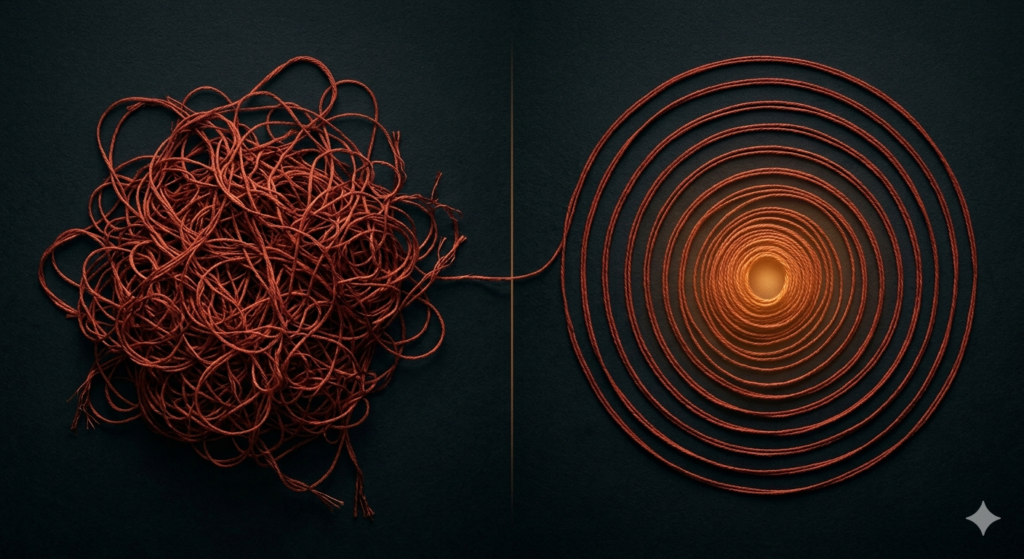
The “sleep when you’re dead” operating philosophy originated in Silicon Valley environments with PAs, personal chefs, and venture capital buffers absorbing the consequences of poor judgment calls.
It migrated globally.
The ideology did.
The infrastructure did not.
For a founder managing operations, sales, client delivery, and growth simultaneously — sleep is not optional time. It is the base layer on which every business function depends.
You cannot optimise output from a crashing system.
A rested organisation produces fewer errors, resolves problems faster, and retains institutional knowledge.
Sleep is not downtime. It is the system update your business cannot afford to skip.

Your Brain Is Running the Same Architecture as Samuel’s Servers
If you’ve watched a software engineer work, you’ve seen the discipline: servers get maintenance windows. Systems get scheduled downtime. Processes that have been running too long get restarted before they degrade performance or corrupt output.
No competent engineer keeps a production server running indefinitely without intervention and calls it efficiency.
They call it a liability.
Your brain is running the same architecture. It just doesn’t throw an error message when it needs to shut down — it silently degrades and lets you believe the output is still clean.
Here’s the technical breakdown:
Garbage Collection
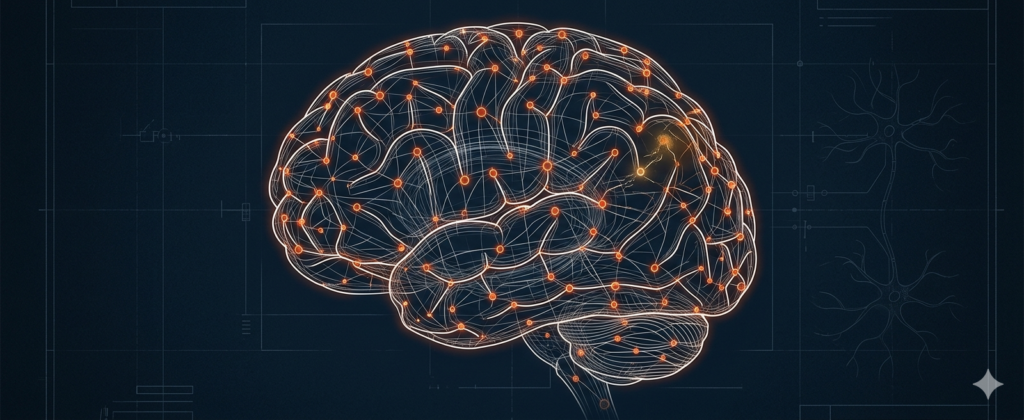
While you sleep, the glymphatic system clears metabolic waste — including beta-amyloid, the protein linked to cognitive decline. This is not metaphorical.
Your brain runs a literal flush cycle.
Skip it consistently, and the system begins operating on accumulated waste.
In software terms: you are running without garbage collection. The memory leak is real.
The slowdown is cumulative.
Cache and Memory Consolidation
Everything you processed during the day — client briefs, negotiation dynamics, pattern recognition — gets written to long-term storage during sleep. Skip the cycle, and the data is volatile. It doesn’t persist. You are working from RAM that never writes to disk.
Defragmentation
REM sleep is when the brain makes non-obvious connections — cross-referencing stored knowledge to surface novel solutions. This is the cycle that produces strategic insight. Running without REM is running a fragmented system: the data is there, but the retrieval paths are broken.
Forced Restart vs. Controlled Downtime
A server that never gets a maintenance window doesn’t run forever. It crashes — at the worst possible moment, under peak load, with no graceful shutdown. Burnout is not a character failure. It is a forced restart on a system that was never given controlled downtime.
Samuel doesn’t deploy code to production at 3a.m. on a degraded system without testing it first.
Neither should you.
The difference between a well-maintained system and a crashed one isn’t raw processing power. It’s scheduled rest, clean cycles, and the discipline to take the server offline before the environment forces you to.
Your business is a production environment. You are the critical infrastructure. Treat yourself accordingly.

What Is Actually Happening at 2 a.m.
Sleep is not passive recovery.
The brain is consolidating learning, clearing metabolic waste, and resetting the executive functions that govern judgment, risk assessment, and complex decision-making.
Research published in Sleep journal found that a single night of poor sleep measurably impairs the ability to read social cues. In a client meeting, a negotiation, or a pitch context — that is not a soft skills deficit.
That is a revenue problem.
The compounding risk:
Sleep-deprived individuals consistently overestimate their own performance. The gap between perceived and actual capability widens without the individual registering it.
The work shows the degradation.
The person does not.
Most late-night “productivity” — on objective analysis — is reactive: non-urgent message handling, rework of already-completed output, low-value activity presenting as momentum. It is not productive. It is familiar.
5 Reasons Sleep Is a Business Decision, Not a Wellness Trend
1. Decision quality degrades quickly.
Harvard Medical School research links sleep deprivation to impaired working memory and slower cognitive processing.
Every high-stakes decision made on insufficient sleep — pricing, hiring, partnerships, client terms — is being made with a tool operating below specification.
The cat does not attempt a hunt at 40% capacity. It waits. You wouldn’t run critical diagnostics on a phone at 4% battery. Same logic.
2. Breakthrough thinking is sleep-dependent.
Novel problem-solving and creative synthesis peak during REM sleep. Cats are crepuscular — most effective at dawn and dusk — because that is when their biology peaks, not because they decided to grind around the clock.
The strategic insight you are chasing at midnight is statistically more likely to surface at 7 a.m. after eight hours than at 2 a.m. after twelve. Know your peak window.
Protect it.
3. Leadership behaviour sets organisational norms.
If 1 a.m. messages are sent and exhaustion is performed as a merit signal, the team absorbs that standard.
Culture is downstream of leadership behaviour. Replacing a mid-level employee in Kenya costs 50–200% of their annual salary once recruitment, onboarding, and lost output are accounted for.
4. The founder is the business continuity plan.
In early-stage businesses, operational continuity is often concentrated in one person.
Sustained sleep deprivation elevates risk of hypertension, type 2 diabetes, and cardiovascular events — conditions rising in Kenya’s professional population.
This is a structural risk, not a personal health matter.
5. Client retention depends on cognitive and emotional capacity.
The qualities that sustain client relationships — active listening, patience, considered responses — are among the first casualties of chronic under-sleep.
Client service is not a personality trait. It is a biological capacity with a depletion curve. You cannot fake it when the tank is empty.
Operational Adjustments — Not Lifestyle Advice
This is not a wellness prescription. It is a resource allocation question.
- Establish a hard close time and treat it with the same non-negotiability as a client deadline
- Audit what is actually being produced after 10 p.m. — output volume versus output quality
- Reframe rest as preparation for high performance, not reward for completion
- Build systems and handoffs that reduce single-person dependency during off-hours

On the Kenyan Operating Context
The structural pressures are real: long commutes from Rongai, Kitengela, Mlolongo. Multiple income streams as economic necessity. An environment with limited margin for error.
These are not excuses.
They are conditions.
And they make the argument for prioritising sleep stronger, not weaker. When operating margins are thin and execution must be precise, cognitive impairment is not a tolerable variable.
This is not a privilege conversation.
It is a performance conversation.
Global Benchmarks: Sleep as Business Infrastructure
| Region | Primary Method | Duration | Delivery |
|---|---|---|---|
| USA / Canada | CBT-I, sleep coaching | 6–8 weeks | Clinic, telehealth, apps |
| United Kingdom | CBT-I (NHS & Sleepio) | 6 weeks | NHS, digital platform |
| Germany / Nordics | Schlaflabore, multi-disciplinary | Ongoing | Hospital sleep centres |
| Japan | Corporate nap programmes, CBT-I | Varies | Workplace-integrated |
| Australia / NZ | CBT-I, fatigue management | 4–8 weeks | Registered practitioners |
| Kenya / East Africa | CBT-I (emerging), EAPs | Emerging | Private clinics, insurers |
The businesses that build rest into their operational culture now — before regulation, before burnout, before talent exits — will hold a structural advantage when this becomes standard practice. And it will.

The Question Worth Asking
Before your next high-stakes decision, apply one test:
What is the actual quality of this judgment — on this brain, at this hour?
Hustle culture asserts that output scales linearly with hours. The neuroscience and the economic data say otherwise.
Rest is not the absence of ambition. It is the condition under which ambition executes reliably.
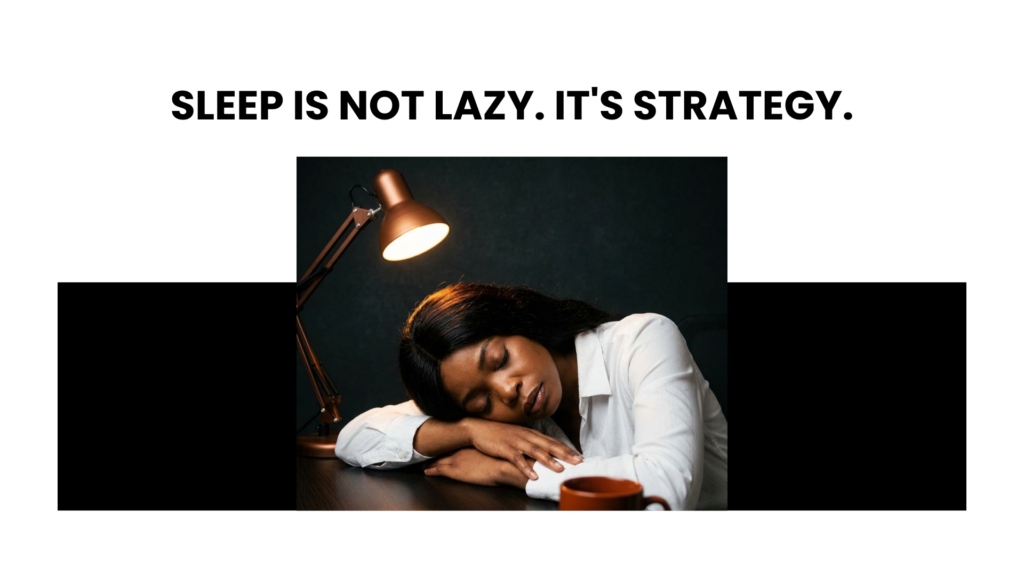
The cat sleeps 16 hours so it can be fully present — and fully lethal — when the moment arrives. That is not laziness. That is the strategy.
Close the laptop.
Log off the group chat.
The business you’re building needs you functional more than it needs you online.
Remember..
Nnalolile For Business works with Kenyan founders and SMEs on editorial strategy, brand positioning, and operational thinking — grounded in evidence, built for your context.
Leave a Reply